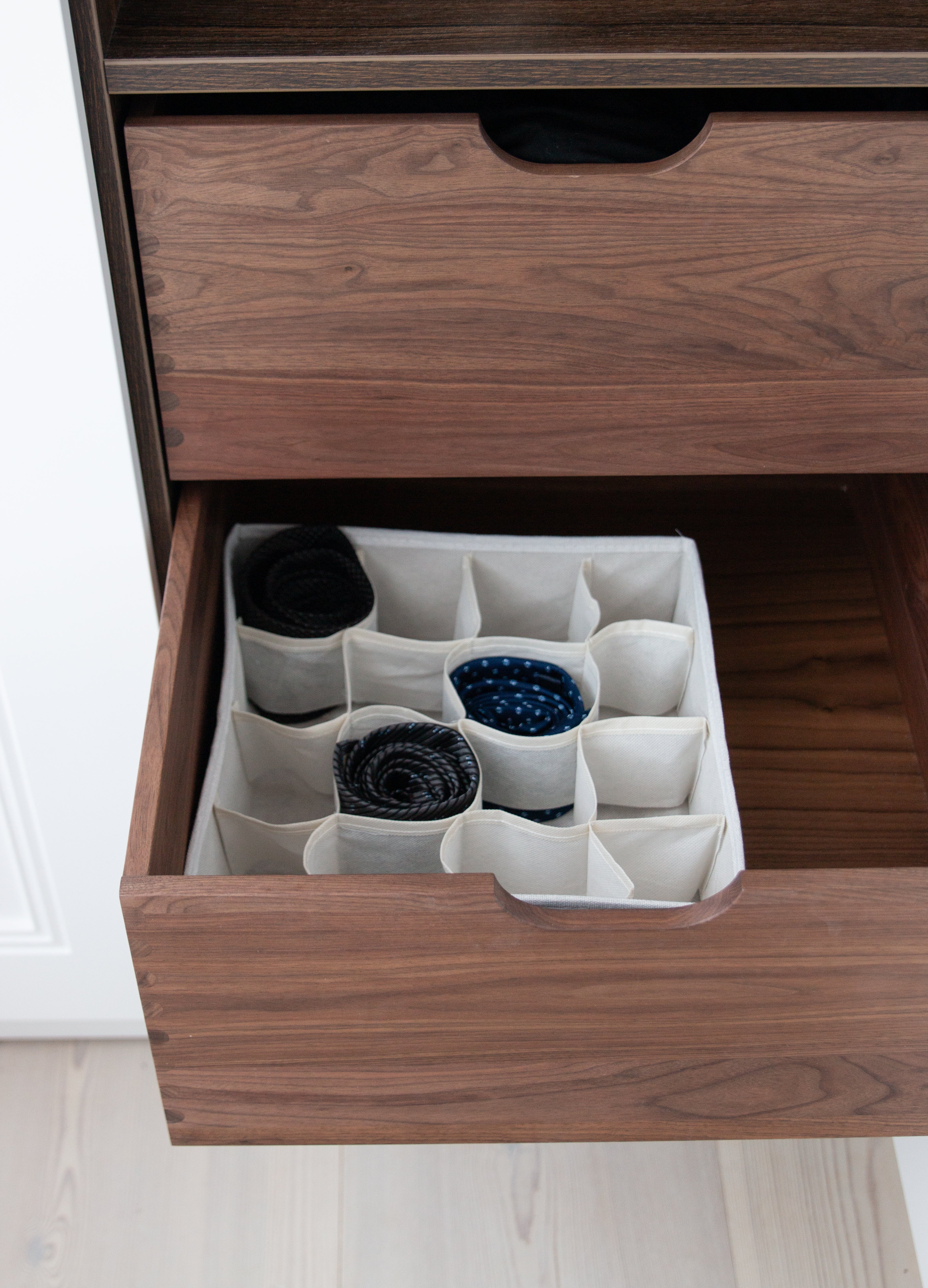


A cutlery tray makes it easy to keep your kitchen drawer tidy. With simple compartments, you quickly find spoons, forks, and knives, and you prevent everything from getting mixed up. Here are practical steps to help you organize a drawer that perfectly suits your daily life.
Drawer organization for cutlery
Start by emptying the drawer and measuring its interior. Decide how many compartments you need for everyday cutlery, and whether there should also be space for serving utensils and small tools. Place what you use most often at the front and left – so your hand reaches the same spot every time. Stick to a few repeated sizes to make the drawer look calm and easy to maintain.
Bamboo drawer insert for the kitchen
Bamboo provides a warm and uniform look in the drawer. Modules made of the same material blend naturally into the kitchen and make it easy to expand if your needs change. Combine smaller boxes for everyday cutlery and larger boxes for salad servers, whisks, and other longer utensils. When the sides of the boxes are close together, you achieve a stable arrangement that does not shift with daily use.
Choose the right size
Choose boxes according to the contents – this way you utilize the space best. A simple example of distribution:
- Drawer box small - good for forks, teaspoons, and dinner knives in separate compartments.
- Drawer box medium - suitable for tablespoons, soup spoons, and smaller kitchen tools.
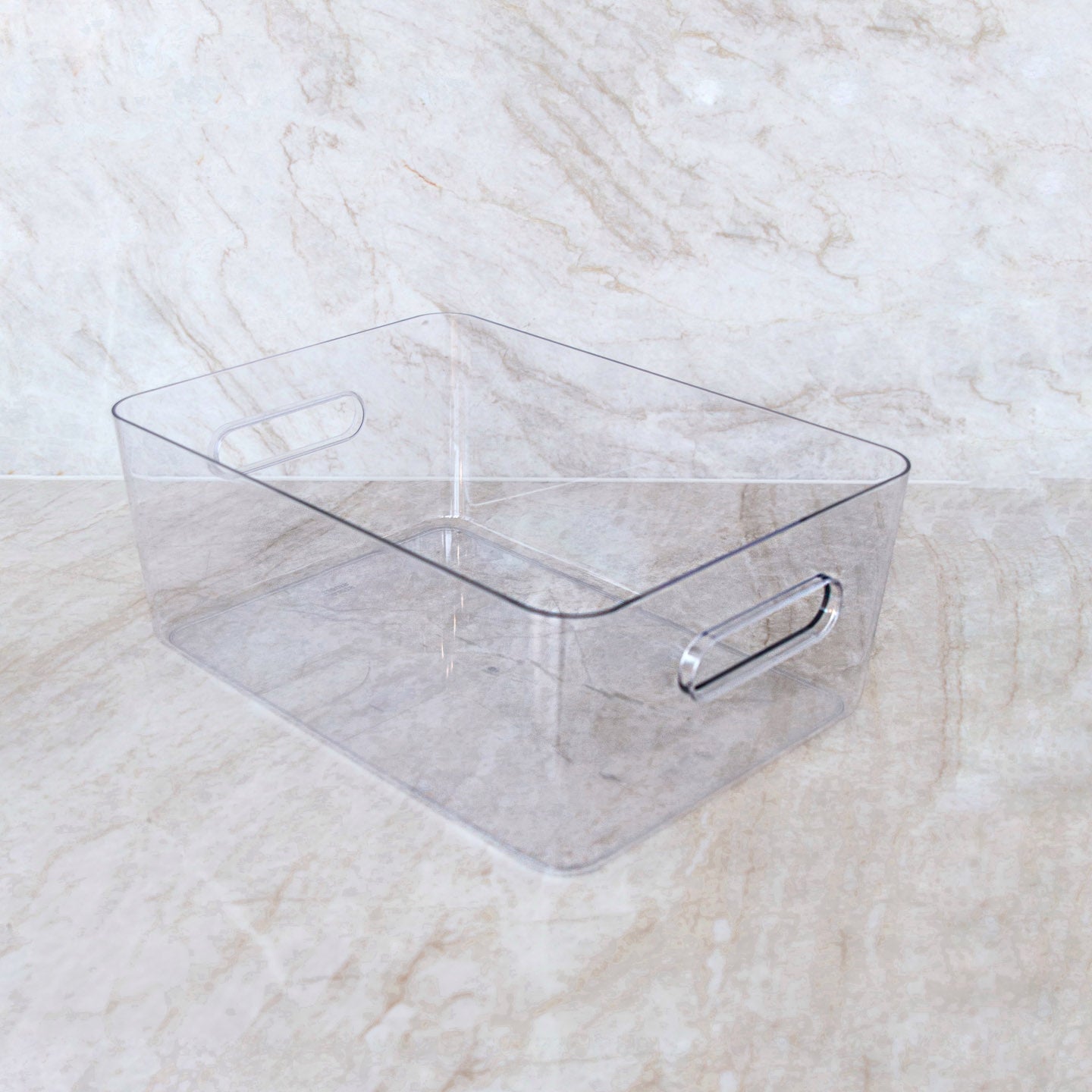
- Drawer box large - space for salad servers, whisks, spatulas, and tongs.
Organizing kitchen drawers
Think in zones: everyday cutlery in the primary zone at the front, serving utensils in the middle, and the longest tools at the back or across, if the depth of the drawer requires it. Fill the width of the drawer with boxes side by side. If you have a little extra space at the edge, a narrow box can close the gap, so the whole setup is stable.
Example of arrangement
Place small boxes for forks and spoons on the left side, a medium box for dinner knives in the middle, and a large box at the back for the longest tools. This structure makes it easy to put away and take out without moving anything else.
How to keep things tidy every day
Give the drawer a quick check once in a while. Remove anything that doesn't belong and put equipment back in the same spot. If you have guest cutlery, it can be placed further back in the drawer, so everyday items are always closest. Consider establishing a regular routine where you sort out duplicates – one good set in use at the front and extra pieces collected in one of the back boxes.
Step by step
- Measure the internal width and depth of the drawer.
- Determine how many categories you need – for example, forks, spoons, knives, and serving pieces.
- Combine boxes so they fill the entire width without loose gaps.
- Test in practice for a week, and adjust placements according to your routines.
In conclusion: Stick to a few sizes, place the boxes in fixed zones, and adjust as needed. If you need more modules or want to extend to other drawers in your home, you can see the full range of boxes here: Boxes.