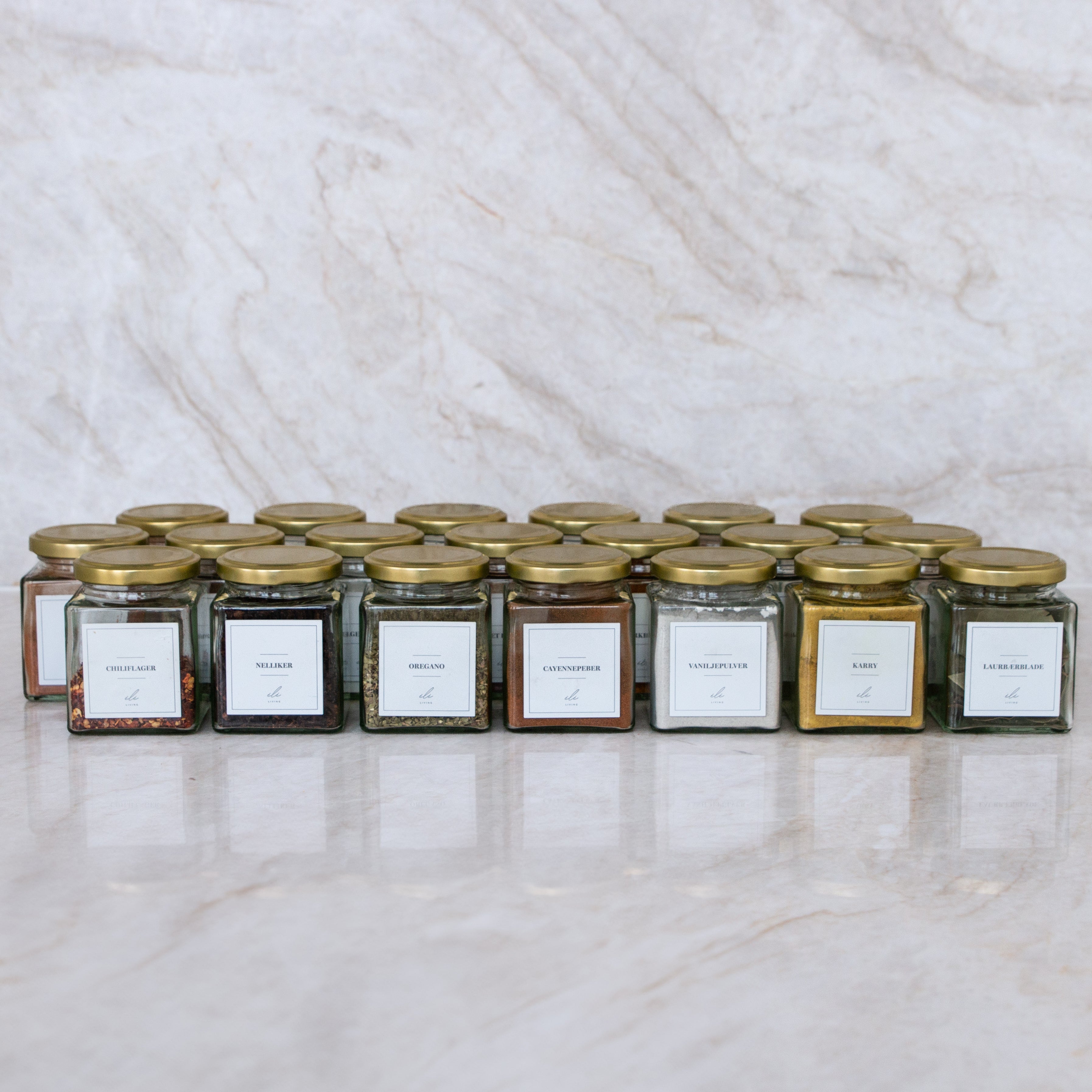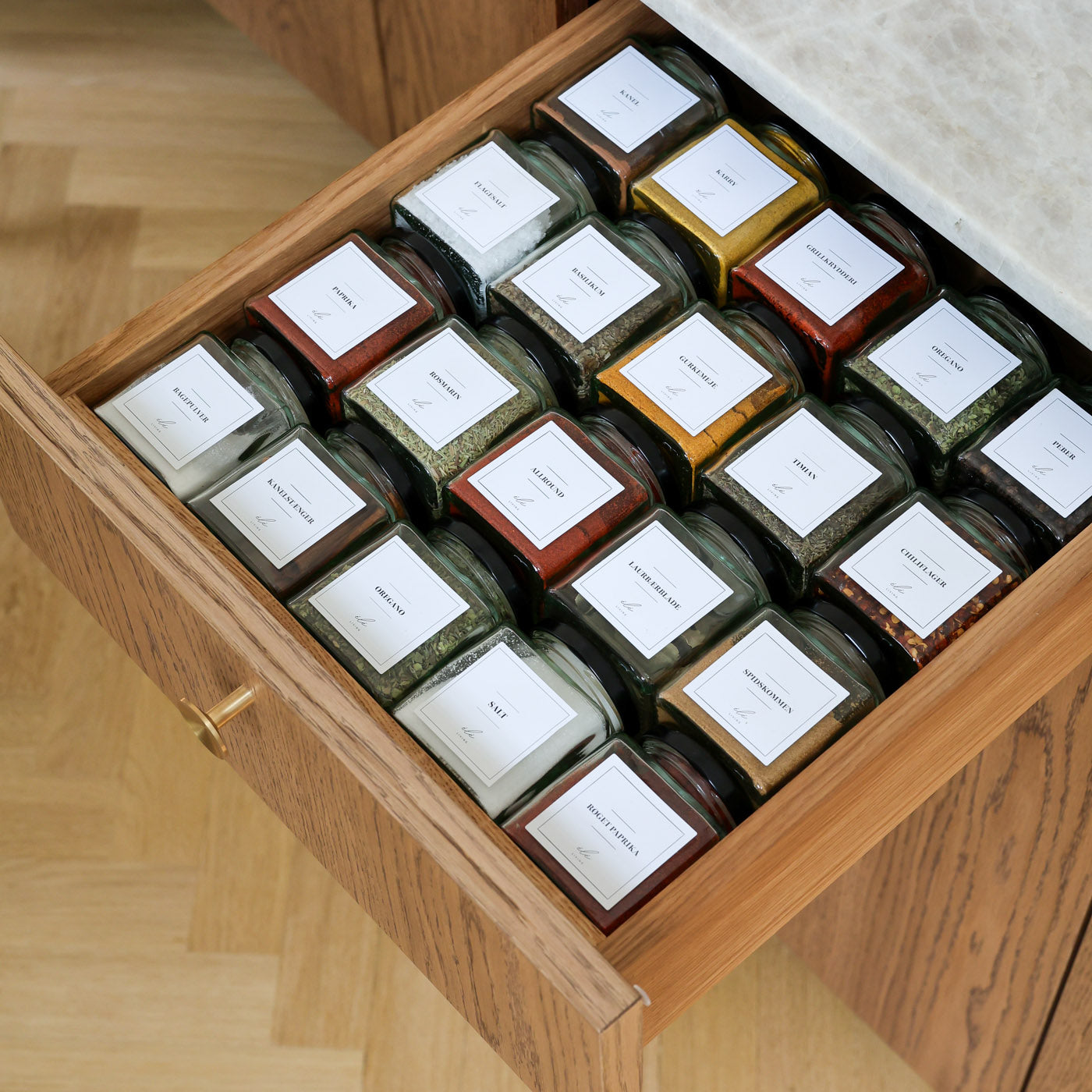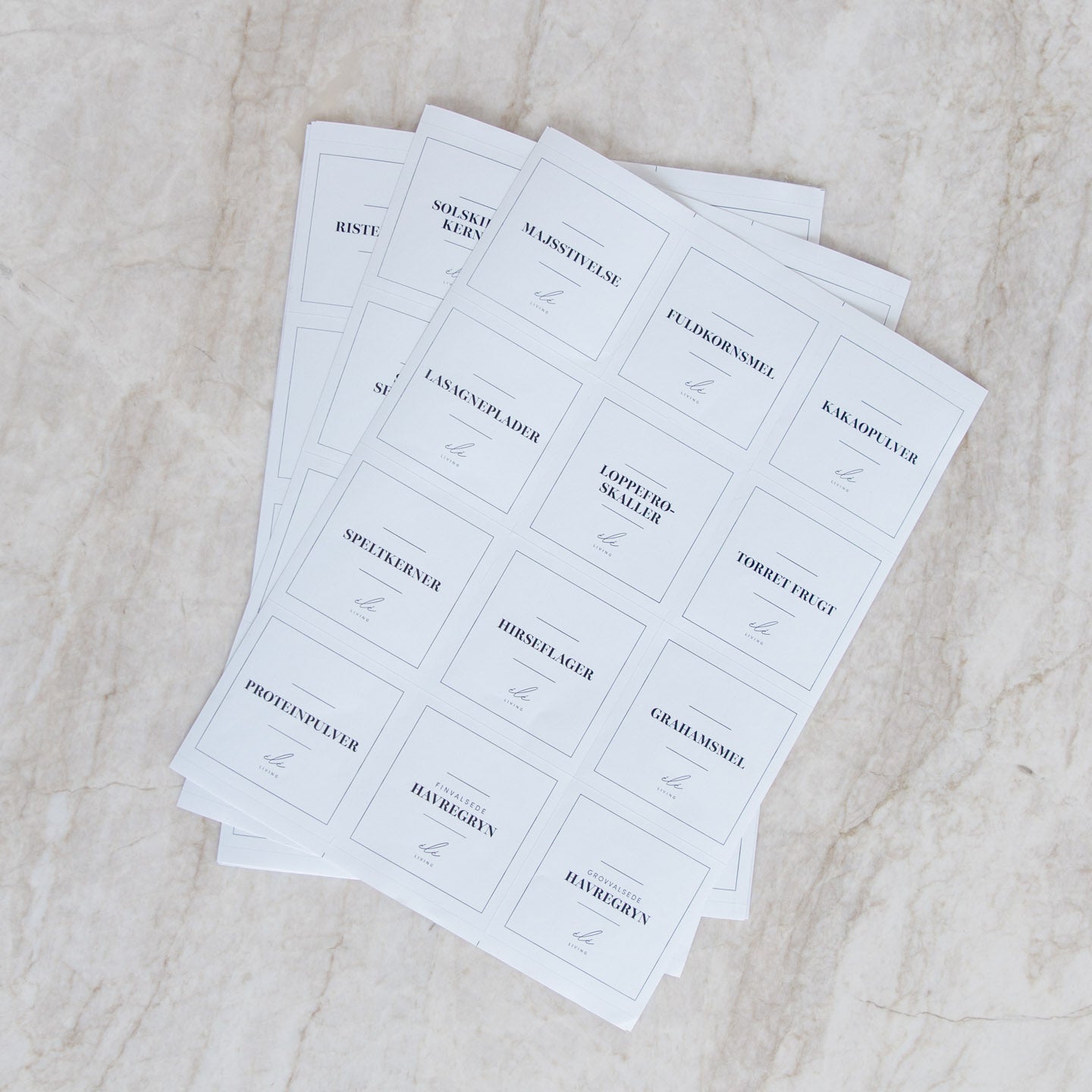

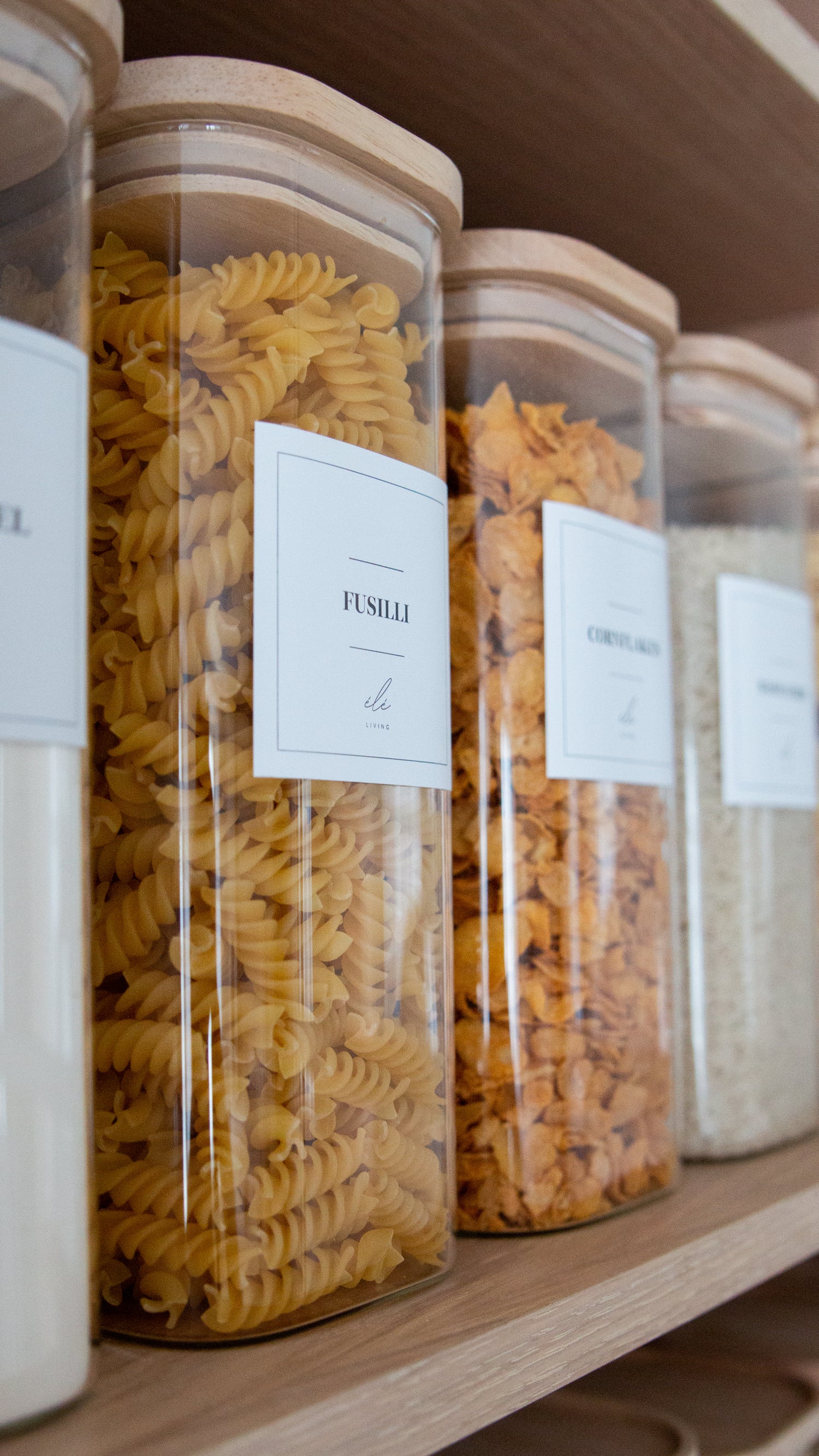
Kitchen storage labels make it easy to create a calm system in cabinets and drawers. When everything is clearly labeled, you can quickly find flour, pasta, coffee and snacks, and it is easier to keep the locations consistent in everyday life. Think like feng shui: repetition, simple lines and clear categories create overview and calm. Choose a uniform expression with classic black and white typography for a harmonious look all the way around. A practical starting point is Labels dry goods , which collects the most commonly used names of dry goods in a ready-made set, so you can get started without hassle.
Kitchen labels
Stick to one label style throughout your kitchen for a clean look. With Labels , you get sets in matching designs that work with glass, plastic, and metal. Start with the broadest categories—breakfast, baking, pasta, snacks—and fine-tune from there. Write or place only the text you need, and place labels at the same height across the shelf. This creates visual clarity and makes it easy to see what’s missing when planning your shopping.
Labels for storage jars
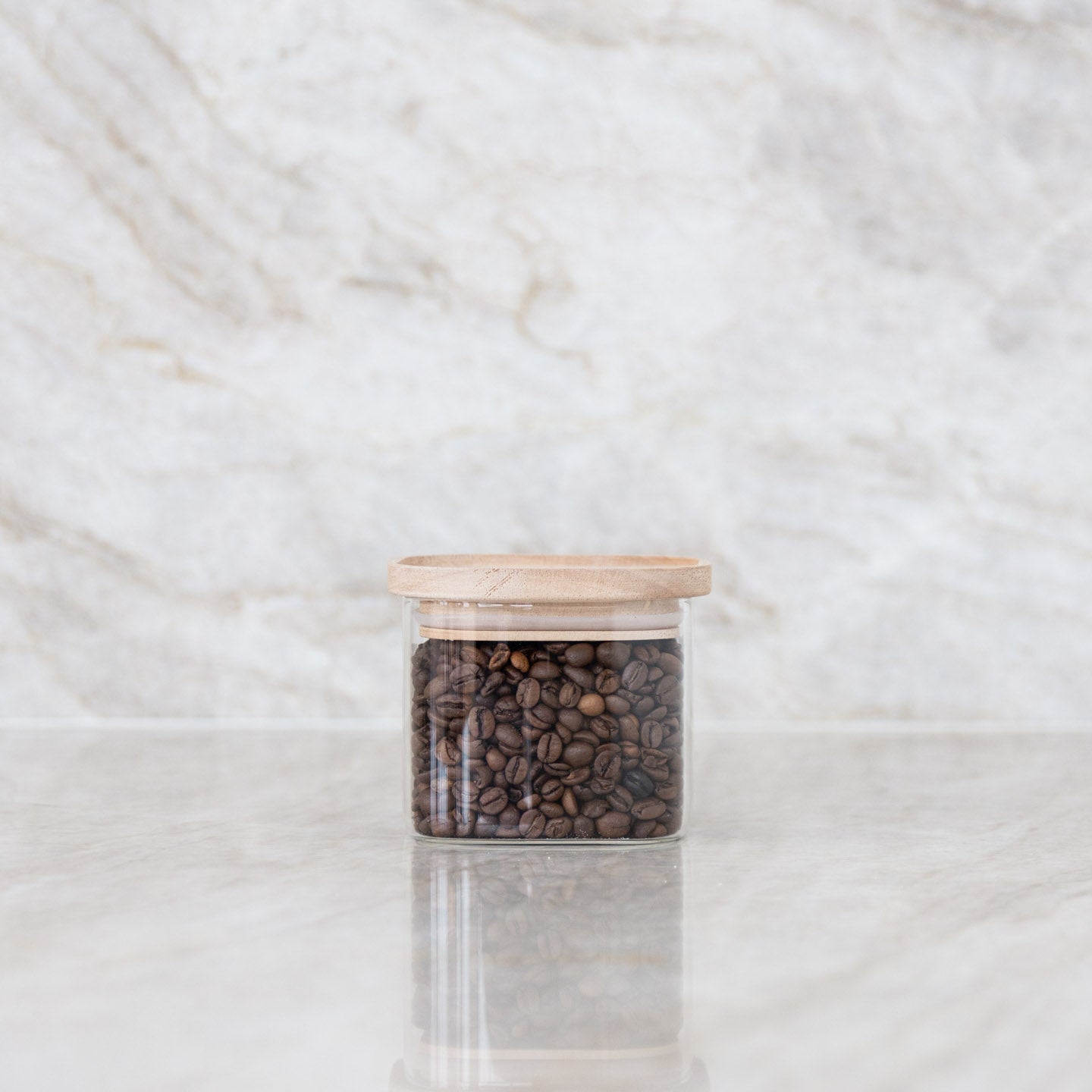
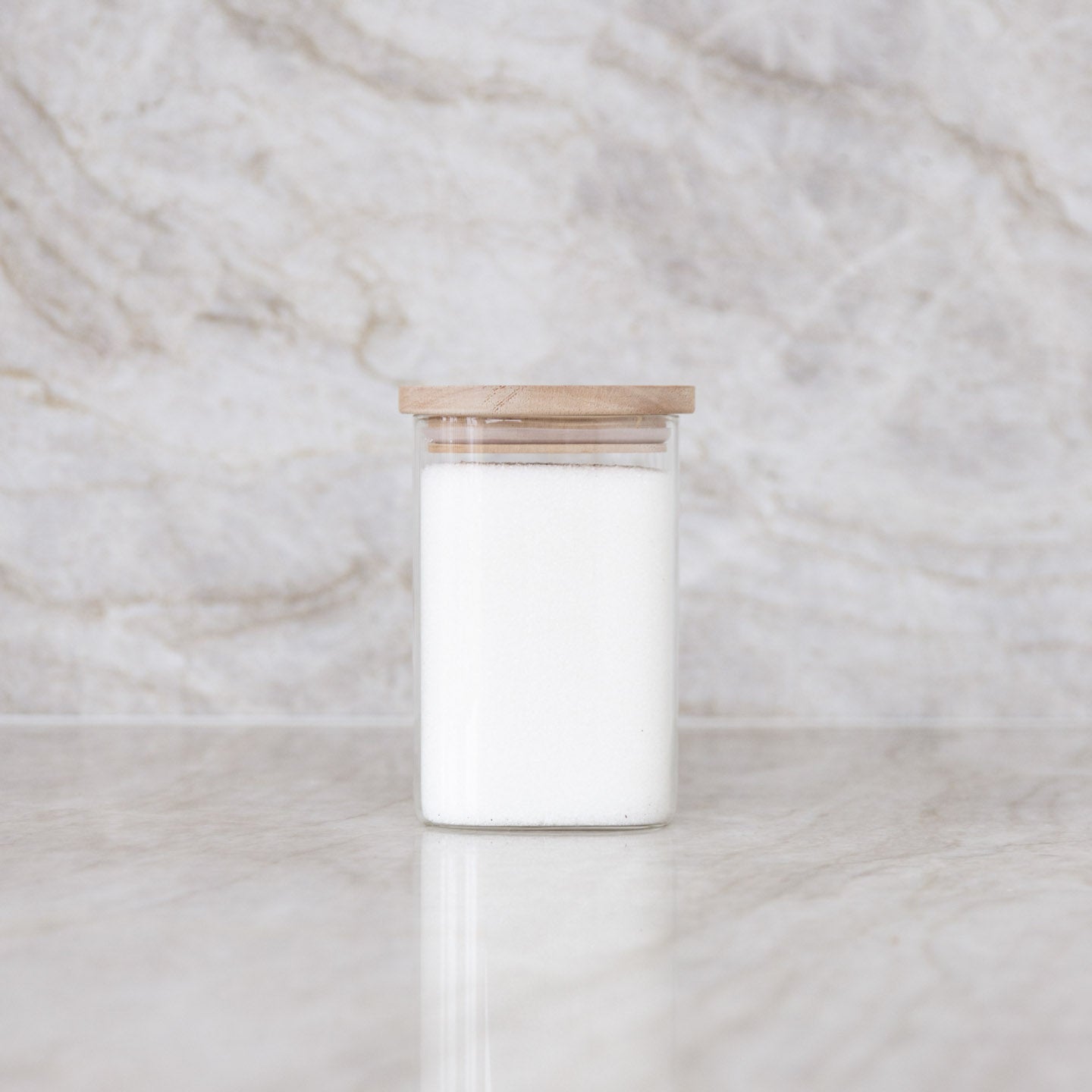
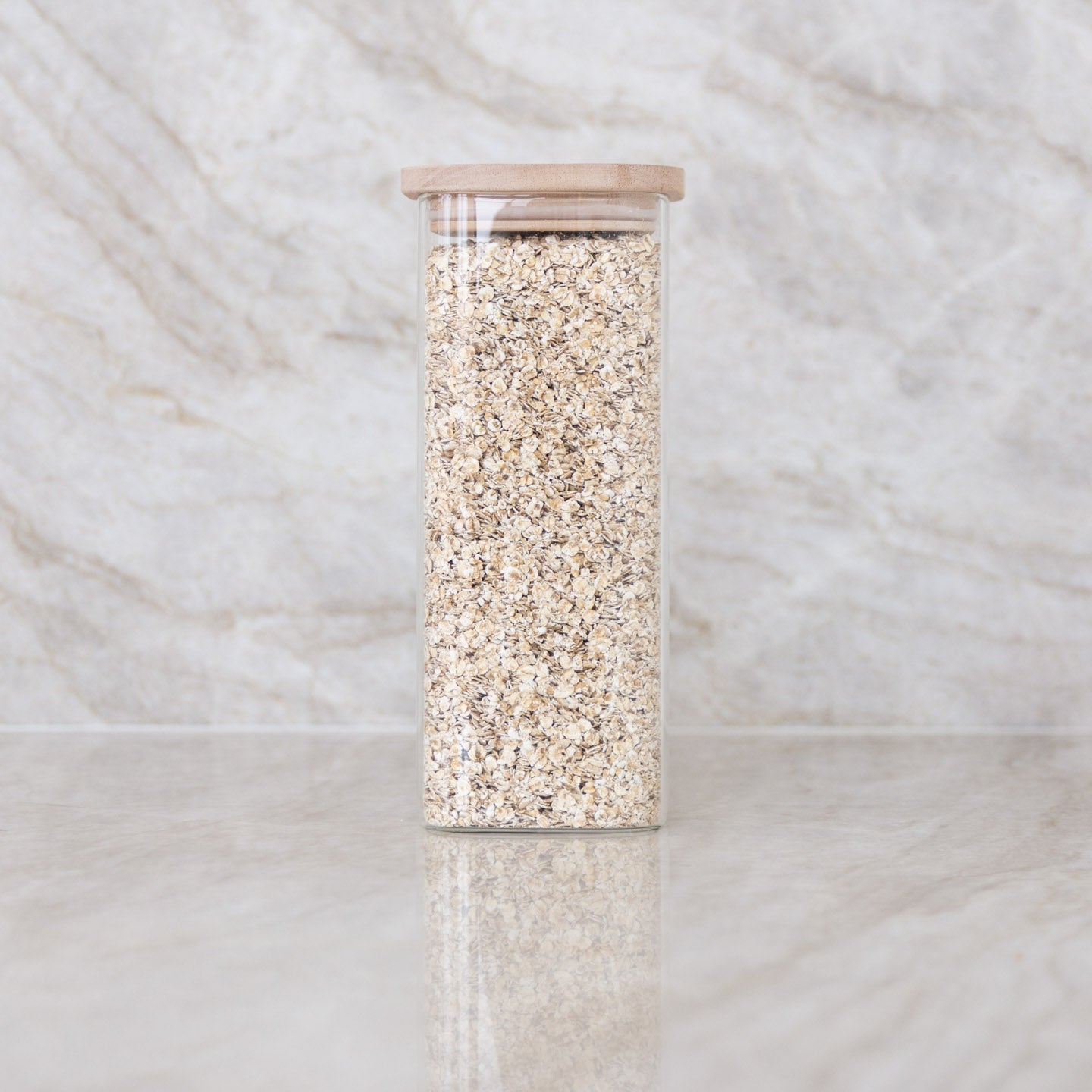
Storage jars with smooth sides are ideal for clear labels. Choose square or round jars so they can be stacked close together in straight rows. Match the sizes to the contents: small jars for nuts and seeds, medium for rice and lentils, large for flour and oatmeal. Storage jars provide a clear overview in the cupboard, and the same labels on the front make reading quick. Place labels in the same place on all jars and in the same size so the system is easy to maintain.
Location and readability
Wipe the surface thoroughly before mounting, and place the label on a clean, dry, flat surface. Place the text in the middle and at eye level on the shelf, if possible. Keep the distance between the label and the bottom of the glass the same across the row for a consistent look that makes everyday handling easier.
Labels for spices
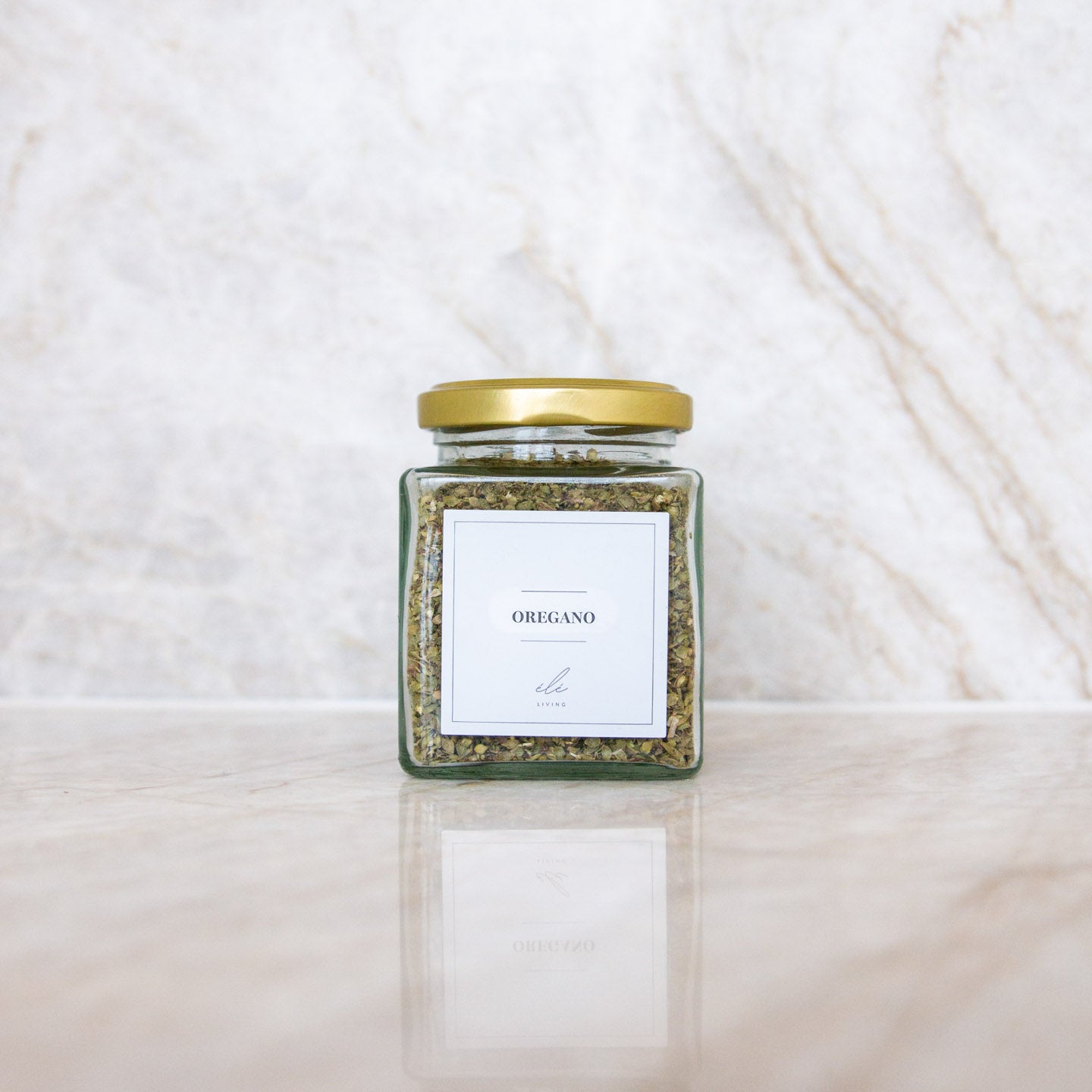
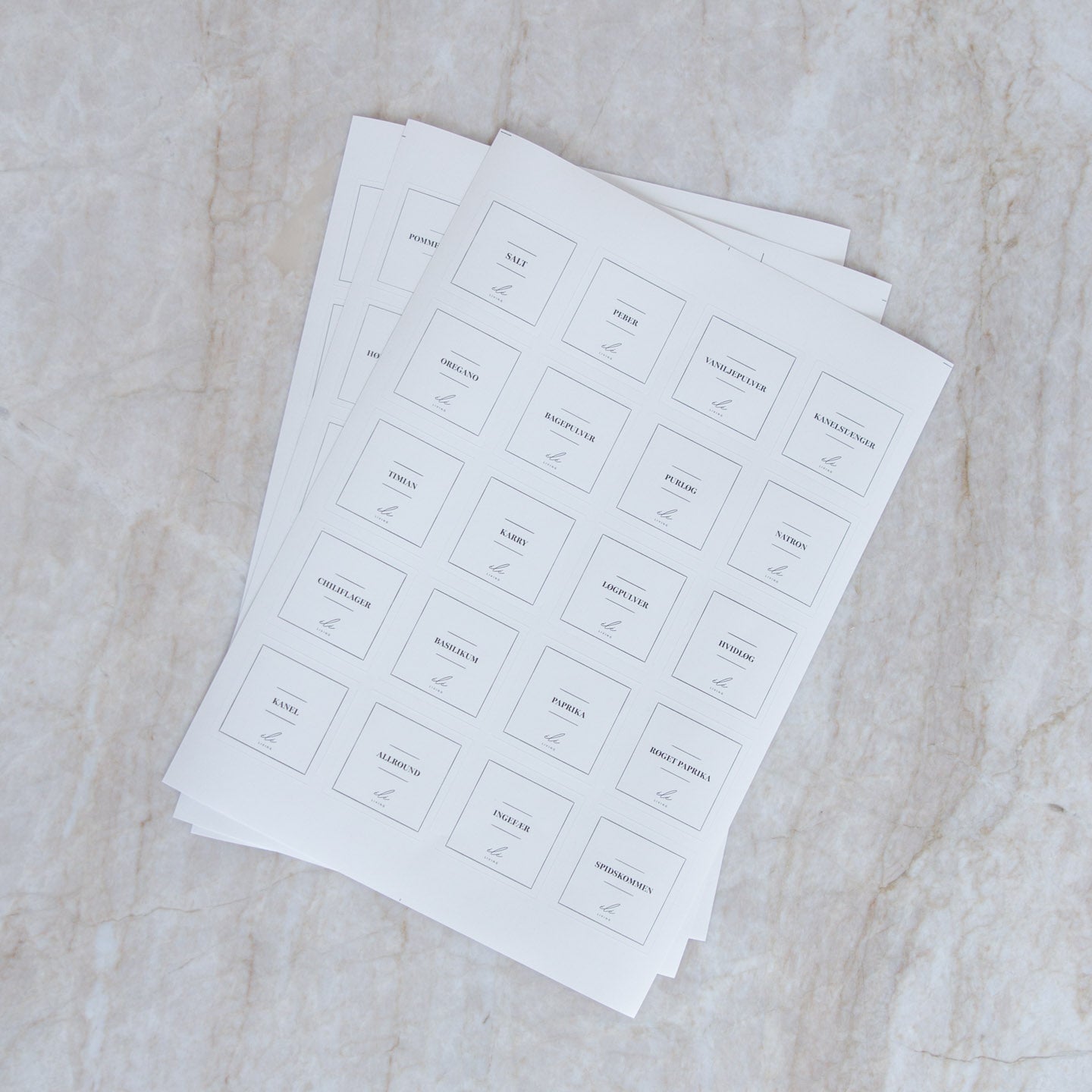
Small labels on spice jars make cooking easier. Put the name at the front and up so you can read it both when the jar is on a shelf and when you look down in a drawer. Group by use – basic spices together, baking spices separately. If you want to expand your storage, you can combine labels with spice jars and accessories so that the jar and the labeling have the same style. Stick to fixed places so you always put the jar back in the same place.
Maintenance and replacement
Change labels when the contents change. Carefully loosen one corner and remove slowly. Clean the surface and place a new one in the same location. This maintains the structure of the system and keeps the shelves clear.
Self-adhesive and removable solutions
Choose self-adhesive labels that stick to smooth surfaces like glass, plastic and metal. This makes it easy to build a system without additional accessories. Removable versions are convenient if you often rearrange. Place labels so that they do not hit edges or grooves of curves - flat areas provide the best durability and readability.
Step-by-step - how to get started
- Sort the kitchen into categories: baking, pasta, grains, snacks, tea and coffee
- Measure the shelf and choose a few repeating glass sizes
- Clean the surface and let it dry completely before installation.
- Place labels at the same height on all glasses
- Arrange the glasses in rows according to use – the ones you use daily at the front
Bring it all together with a package deal
If you want to get to your goal quickly, you can choose Package Solutions . Here you get coordinated elements that match in style, so you can build a system that feels calm and looks the same from the start. Combine sets of labels with matching glasses, and gradually expand as your needs change. This provides a stable base and makes maintenance simple from day to day.