

Food storage containers make it easy to create calm in the kitchen, keep track of leftovers, and make contents clear for the whole family. When you collect food items in transparent containers and use fixed zones in the fridge, freezer, and cupboards, it becomes easier to find what you need and to use up food in time.
Storage containers for the fridge and freezer
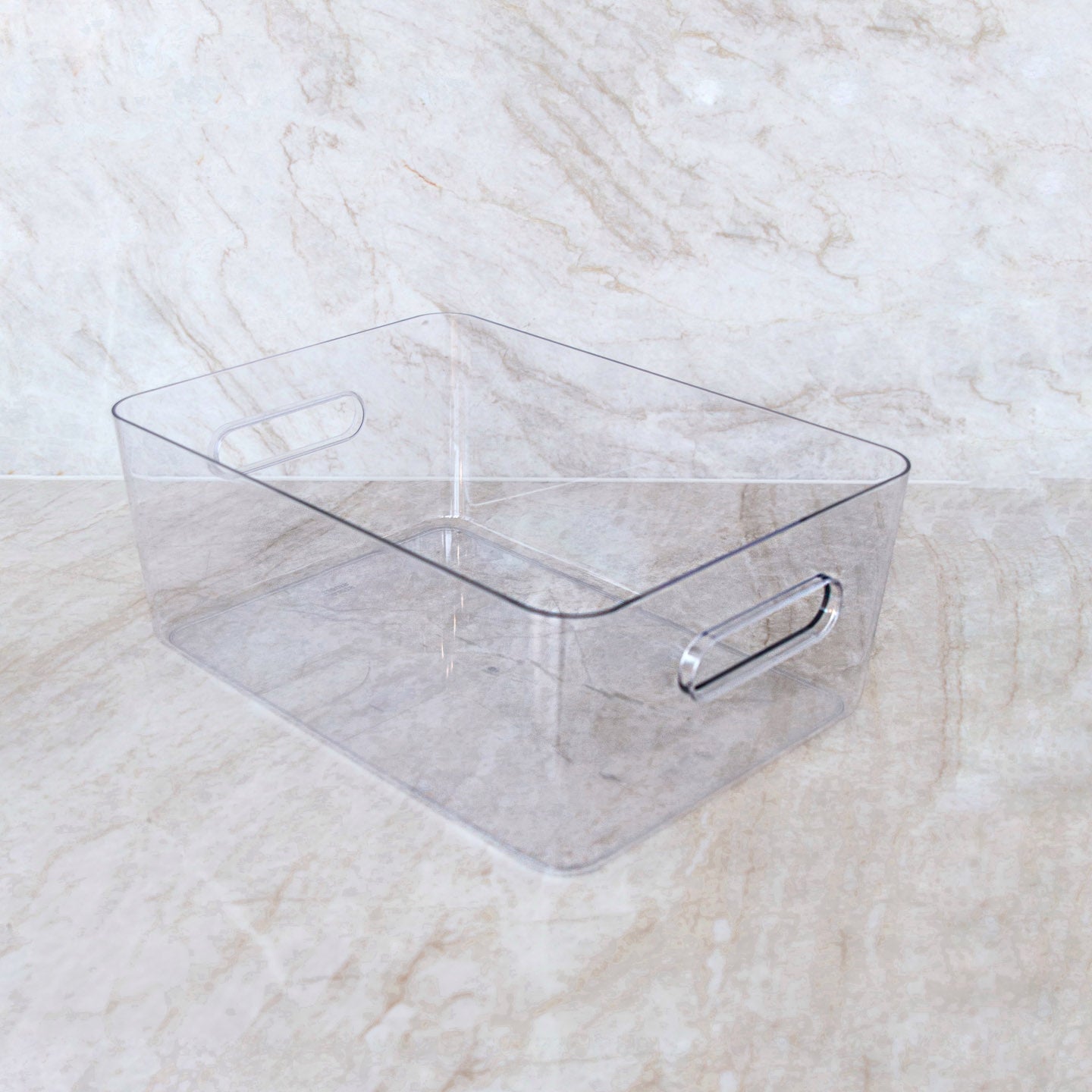
Storage containers are good for both the fridge and freezer. They gather small items like snacks and cold cuts, and they can also be used for chopped fruit and vegetables or entire meal leftovers. Choose containers with lids so you can stack them and utilize height. Place the containers in fixed zones – e.g., leftovers gathered in one place and lunch items in another – so routines become simple in everyday life. Go for a series that repeats a few sizes, for a calm expression and a system that is easy to maintain. See the selection of Storage Containers.
Choose the right size
- Small containers: berries, nuts, snacks, small pieces of fruit and vegetables.
- Medium: cold cuts, chopped greens, sliced cheese, lunch accessories.
- Large: whole meal leftovers such as pasta dishes, stews or baked vegetables.
Space optimization and overview
- Place containers with the oldest contents at the front so they are used first.
- Close each container with its lid and stack them on top of each other to optimize space in the fridge.
- Write the date directly on the lid so you quickly see what needs to be used first.
Glass containers for leftovers and packed lunches
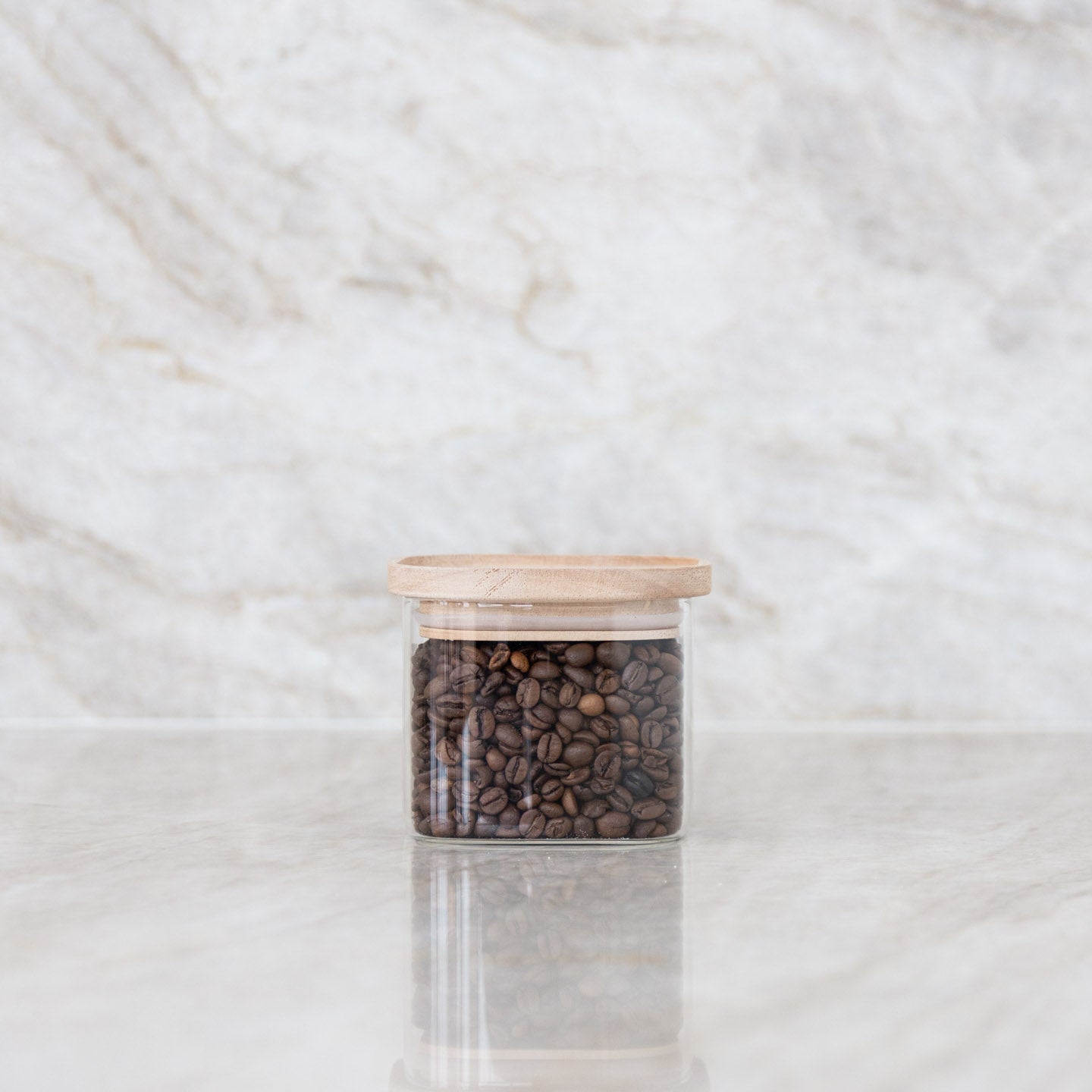
Glass is practical because you can clearly see the contents. A specific choice is glass food storage boxes with bamboo lids. The set includes three sizes, covering most needs: the small one for vegetable sticks or small portions, the medium one for cold cuts or salads, and the large one for dinner leftovers. The boxes can be used in both the fridge and freezer, so you can prepare several portions at once and have them ready.
Dry goods in containers and jars in cupboards and pantry
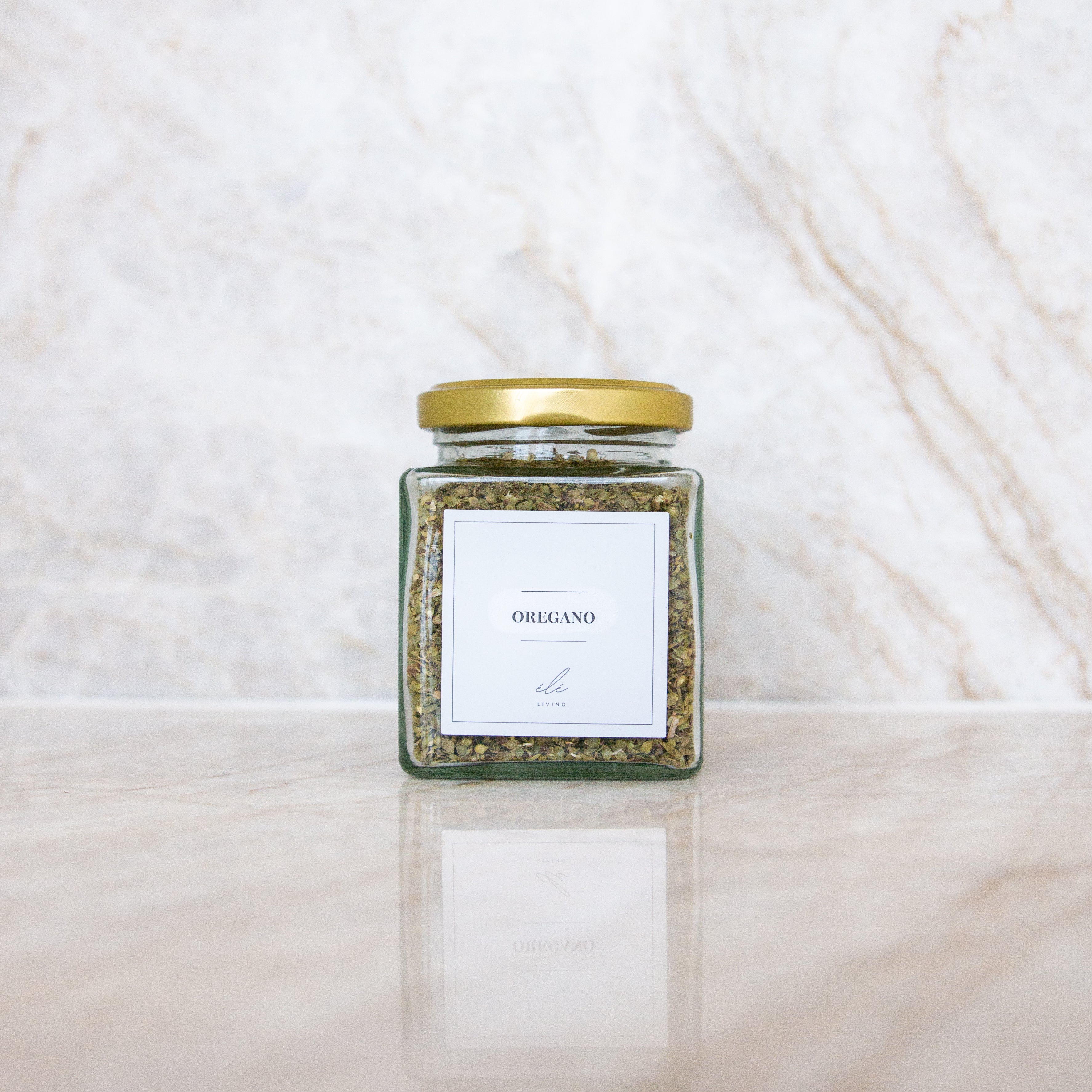
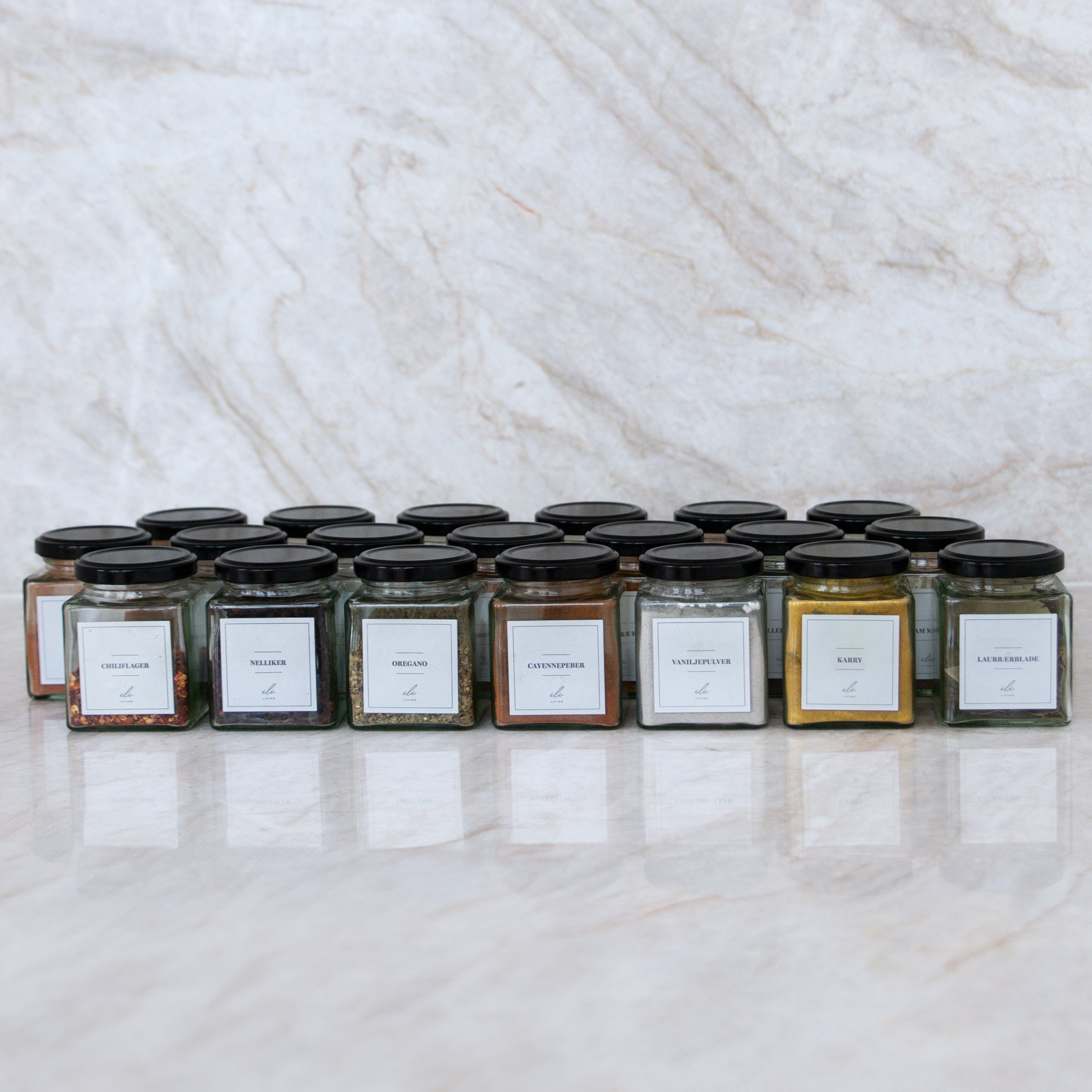
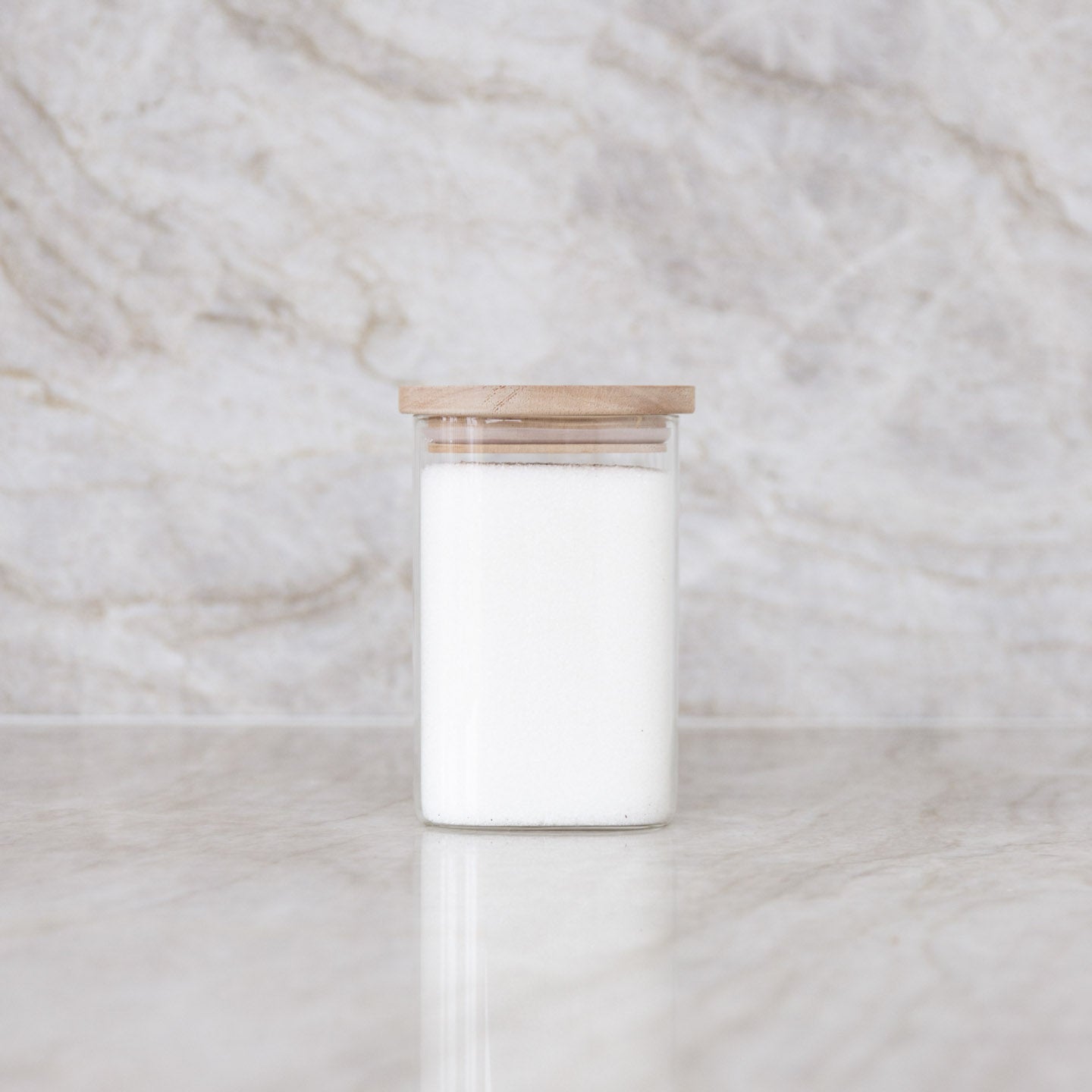
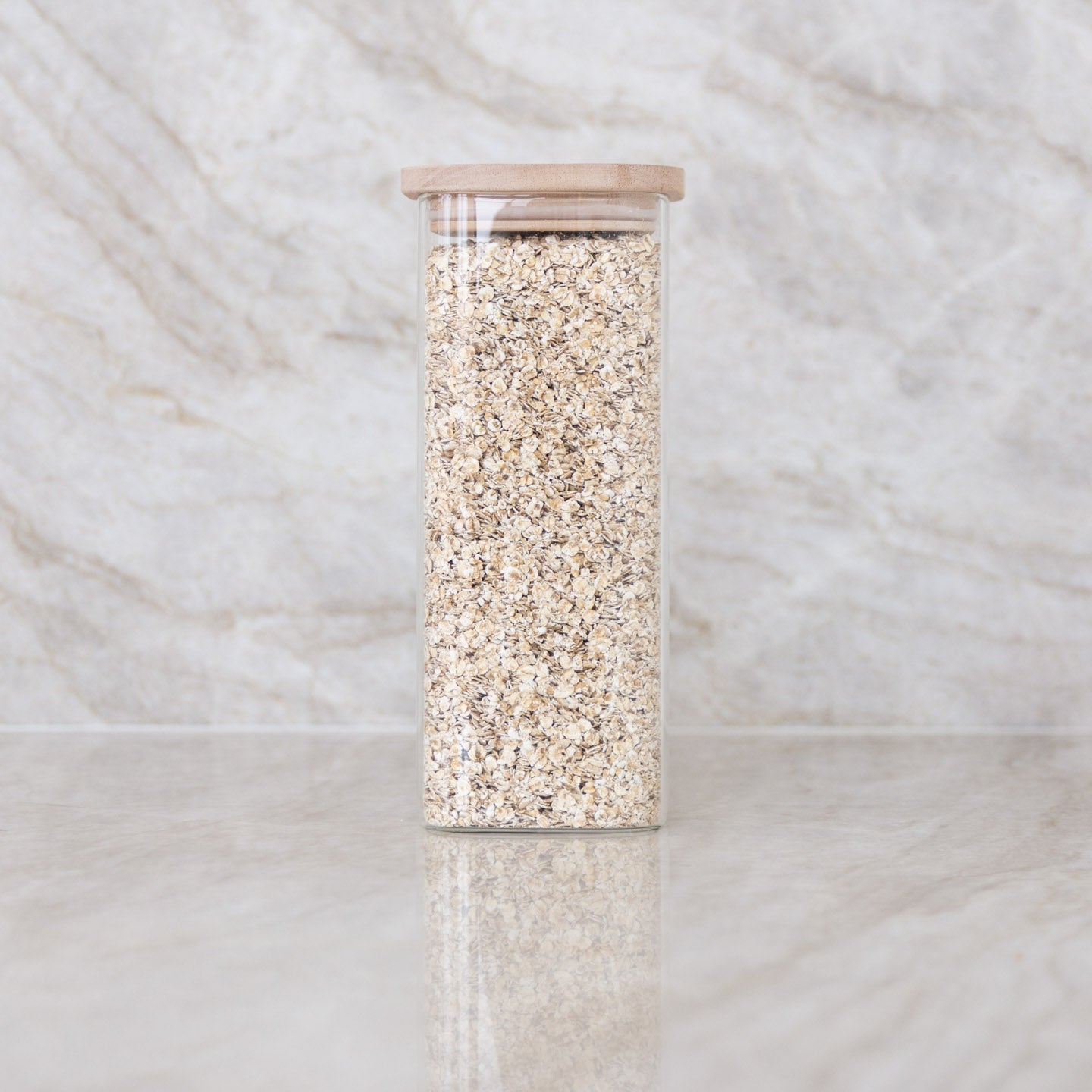
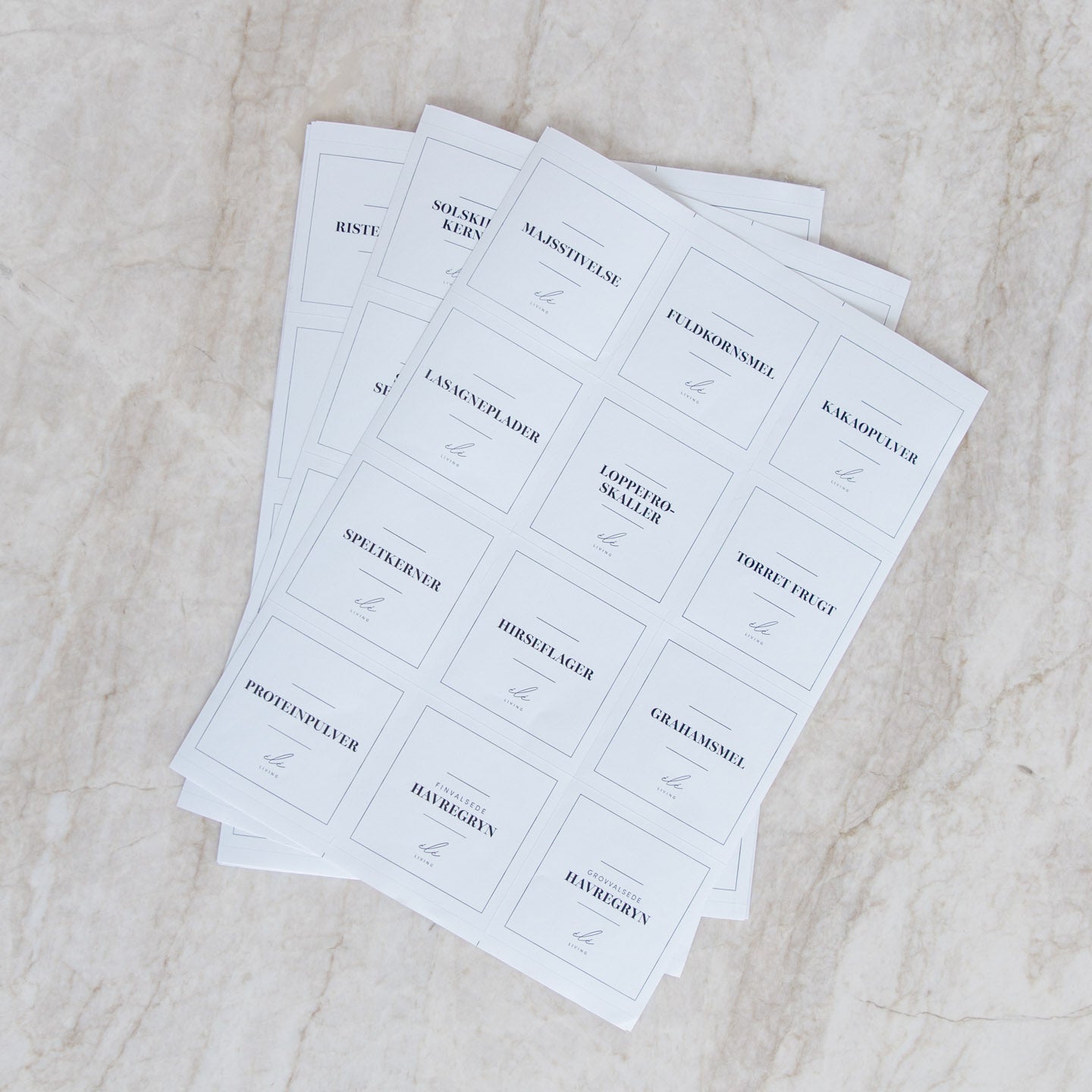
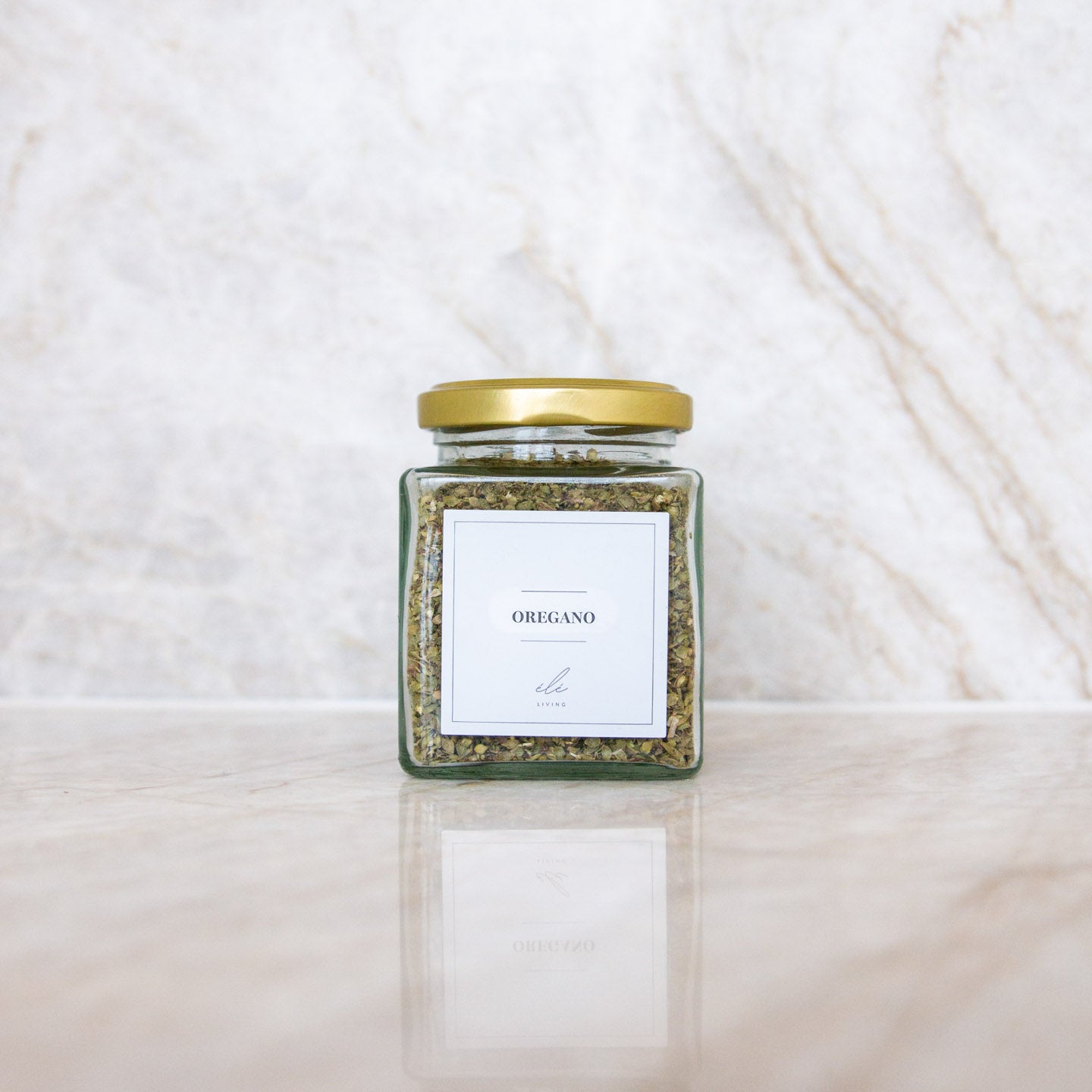
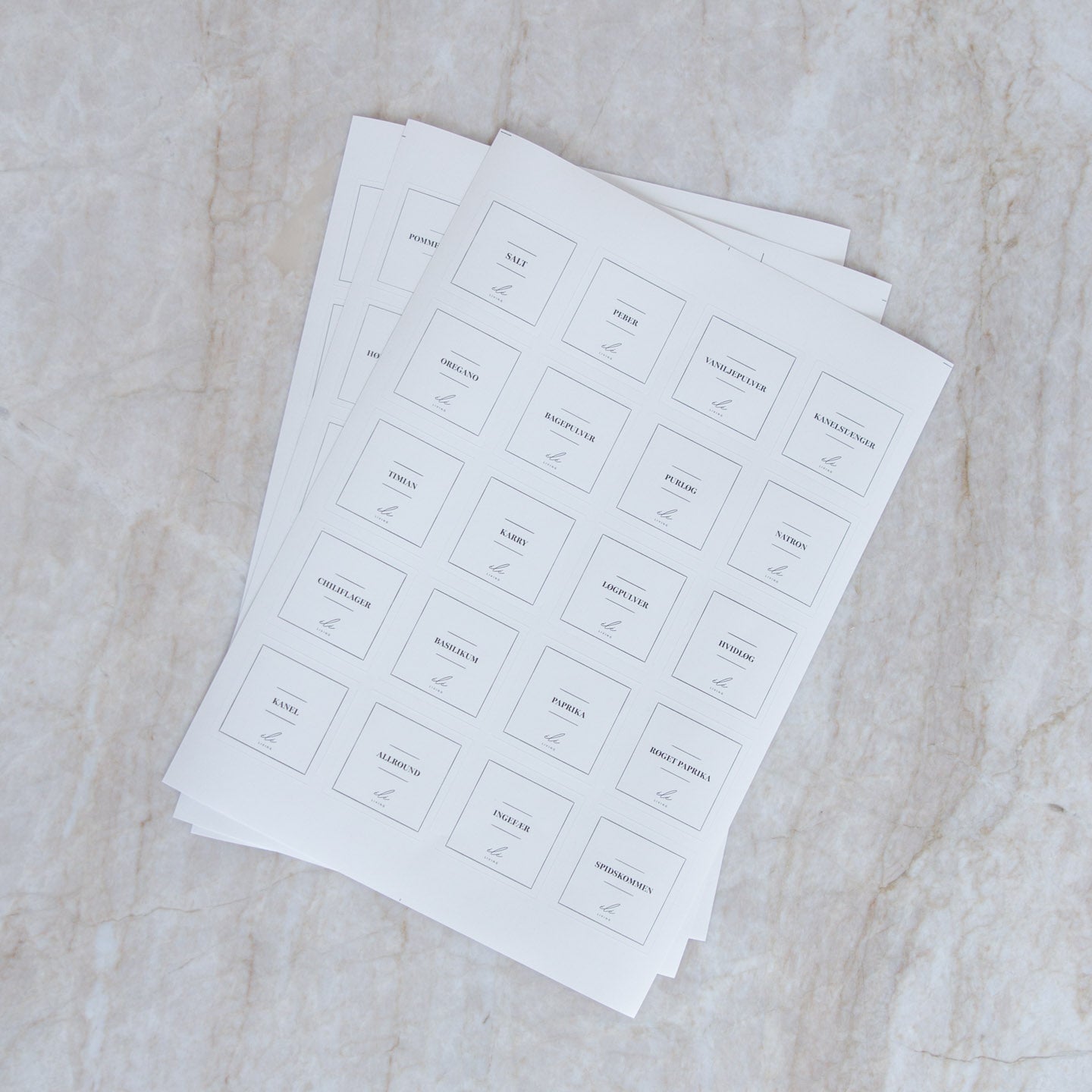
When dry goods are stored in dedicated containers, cupboards and shelves become more organized. Transfer flour, oatmeal, rice, and pasta into storage jars, preferably square and stackable, to maximize space utilization. Glass jars with wooden lids provide a calm aesthetic and help keep pests out. Group related items in rows – e.g., all baking ingredients together – so you can quickly get an overview and plan your cooking.
Stackable solutions that save space
A consistent system makes everyday life easier. Stick to a few repeated sizes and use lids so that the containers can be stacked without tipping. This creates an even front line in the fridge and cupboards and frees up shelf space. If you want to get started quickly, a package solution with storage containers can be a good shortcut to a unified look and the most commonly used sizes from the start.
How to get started
- Empty and sort: Collect leftovers, snacks, and accessories separately.
- Measure your shelves: Choose containers that fit the depth and height so you can stack.
- Choose according to use: Small for berries and snacks, medium for cold cuts and chopped greens, large for meal leftovers.
- Establish zones: Leftovers in one place, packed lunches in one place, accessories in one place.
- Note the date: Write the date on the lid and place the newest items at the back for easy rotation.
With a few well-thought-out steps – repeated sizes, fixed zones, and stable lids – food storage becomes simple and manageable. Choose the solutions that suit your routines and gradually expand as everyday life demands more space or more portions.