
Are your cans also scattered here and there in the kitchen cabinet? Perhaps chickpeas are hidden at the back, while chopped tomatoes, corn, and coconut milk are mixed together at the front. You're not alone. Fortunately, can storage doesn't have to be complicated. With fixed places and a simple system, you'll quickly get a better overview of the groceries you already have.
An organized kitchen cabinet isn't just about looking nice. It makes it easier to find what you need when you're cooking, and it creates more calm in your daily life. Small changes can make a big difference for both overview and peace of mind.
Why does can storage bring more calm to the kitchen?
Cans can quickly take up more space than you'd think. They come in different sizes, easily roll around on a shelf, and are often pushed further back when new purchases are put away. That's why many end up buying duplicates or discovering a forgotten can long after it could have been used.
When you group preserves and other canned goods by type, it becomes easier to see what you have. For example, you can keep beans and lentils together, collect tomato products in one place, and make room for corn, coconut milk, or tuna in another zone. It's a small system that makes cooking more manageable.
A good flow of energy in the kitchen often arises when everything has a designated place. You don't need to create a perfect cabinet, but one that is easy to maintain.
How do you organize cans in the kitchen cabinet?
Start slowly with one shelf or one cabinet. You don't need to turn your entire kitchen upside down at once. When you can see all the cans together, it will be easier to choose a system that suits your habits.
- Take all cans out. This gives you an honest overview of what's in the cabinet and what you actually use.
- Sort by food type. Create small groups for, for example, beans, tomatoes, canned fish, soups, and other favorites.
- Choose fixed zones. Place the cans you use often at the front or on the shelf that is easiest to reach.
- Utilize the height of the cabinet. Divide the shelf so that you both make use of the space and can still see the contents.
It can be a good idea to place cans of the same type together, but without making the system too rigid. If you know that your family often uses certain food items, they should naturally have the most accessible space. A system should fit your daily life and not the other way around.
What kind of storage is good for cans?
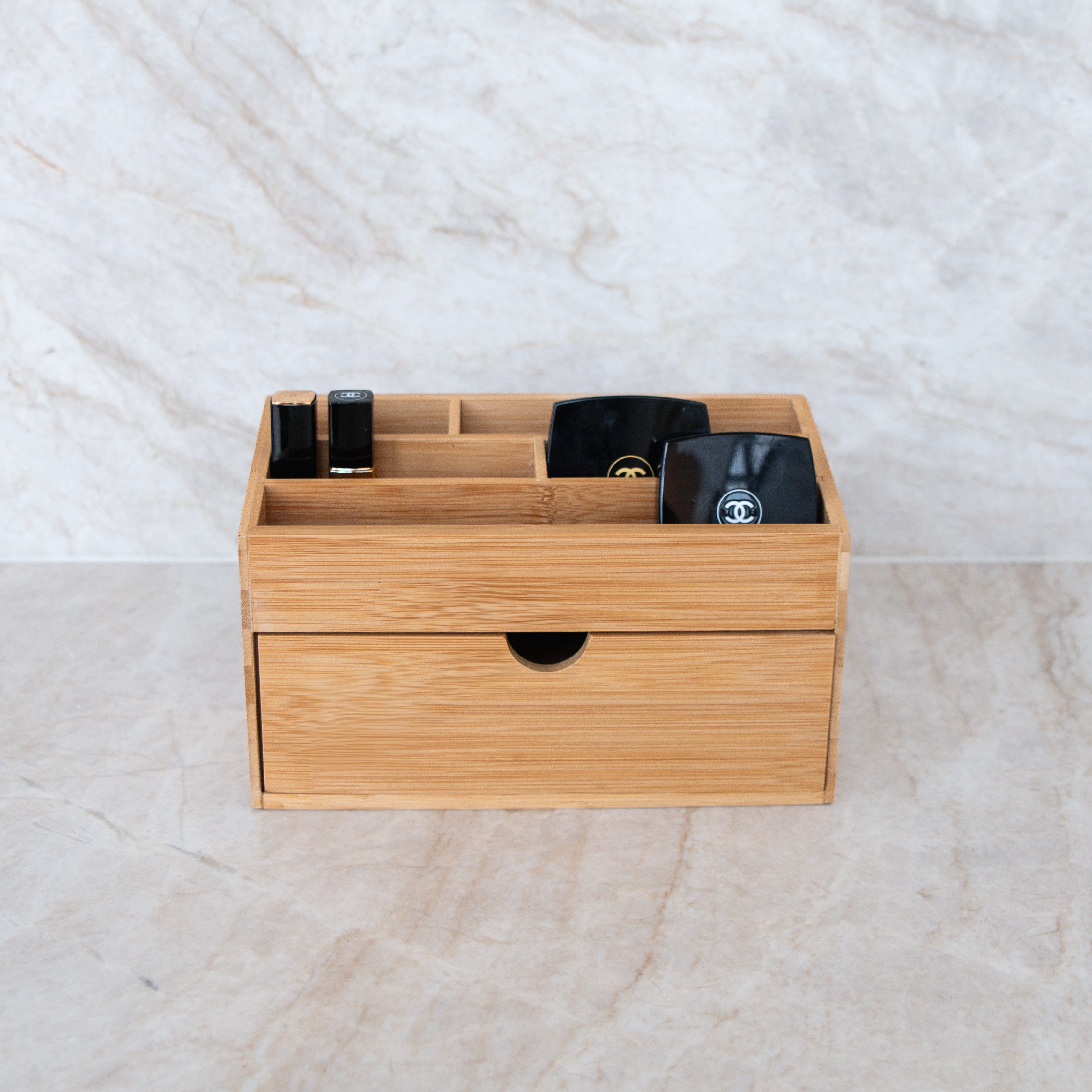
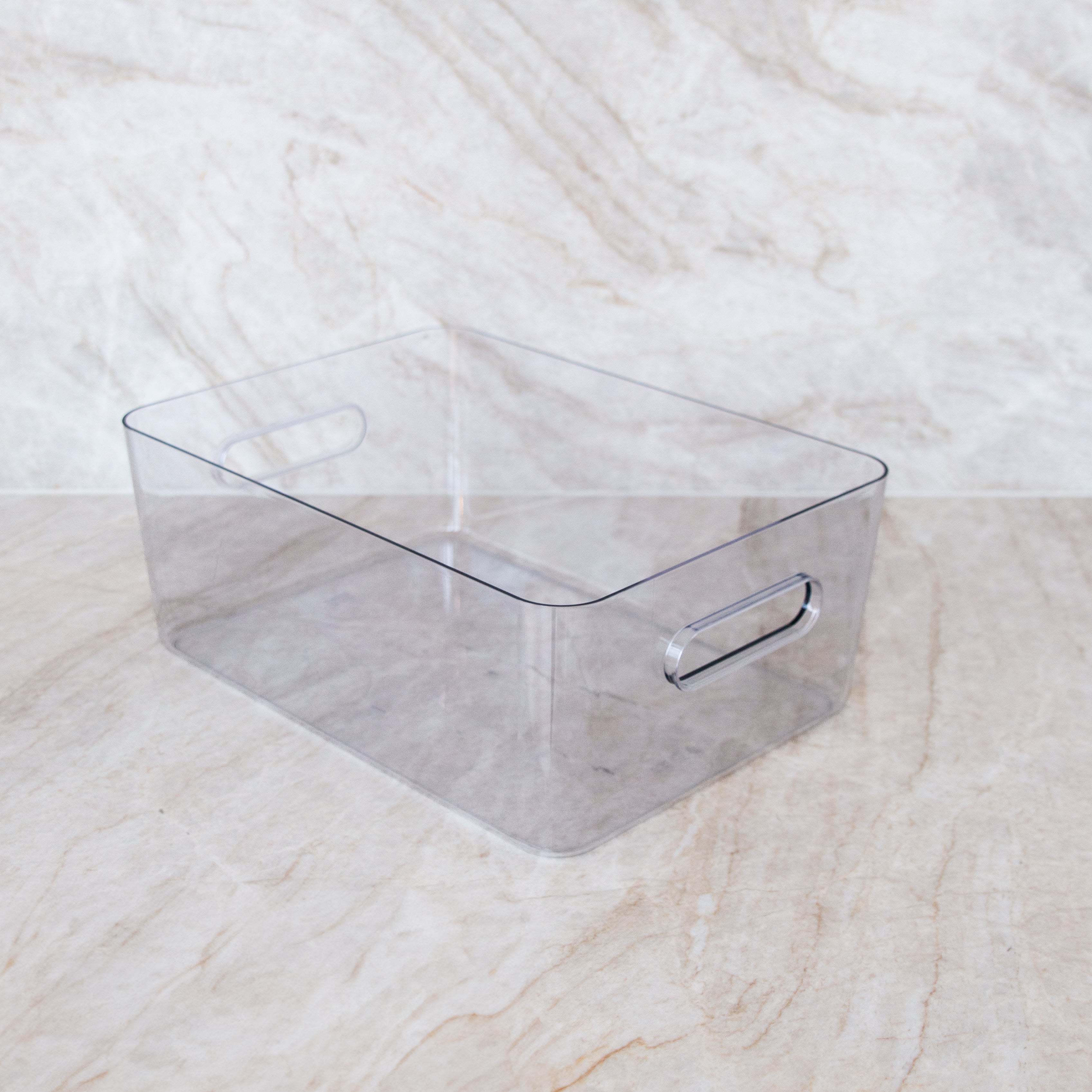
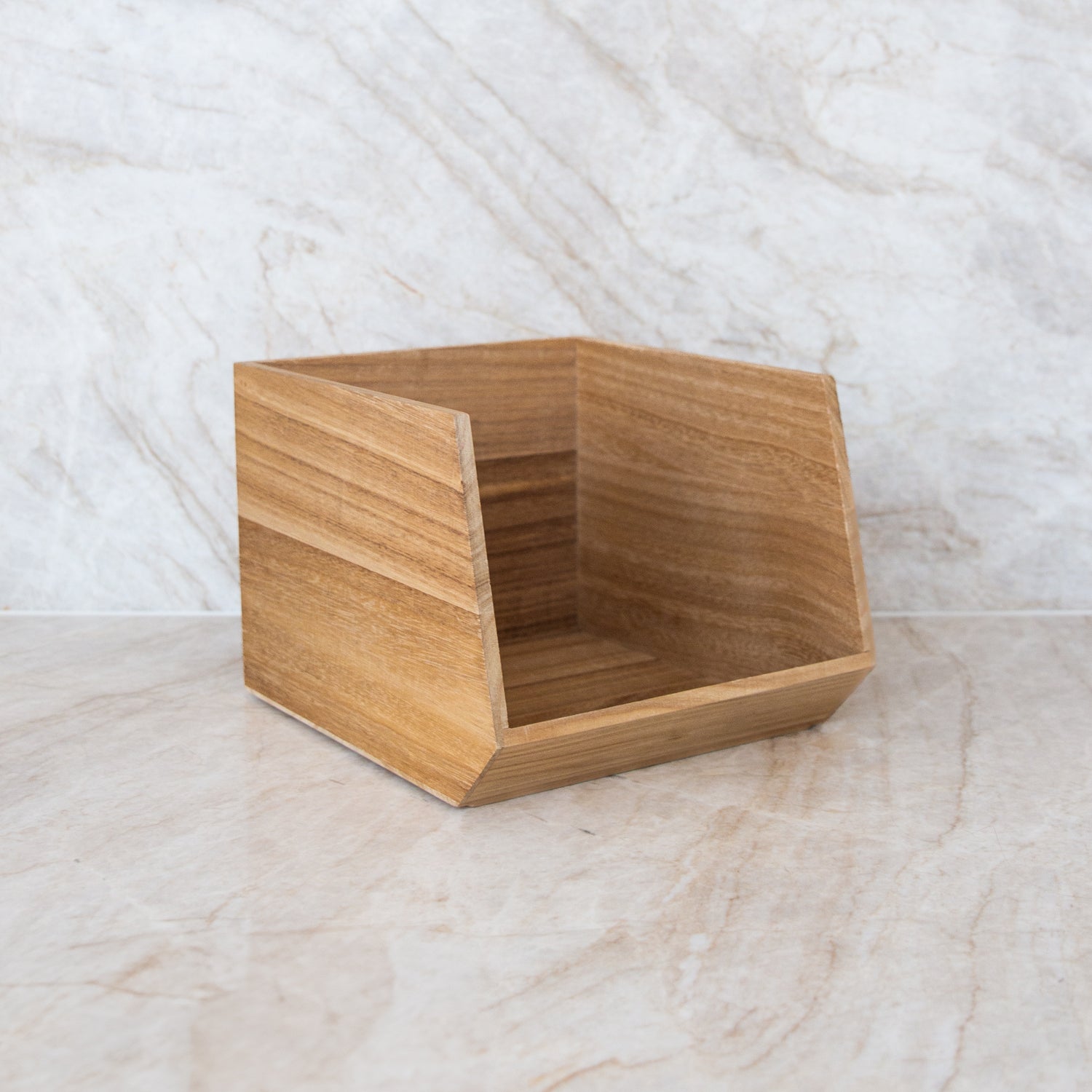
Open boxes are a simple solution when you want to group canned goods into clear categories. An acacia wooden box with an open front can provide a natural and calm frame for the cans on the shelf. At the same time, it becomes easier to take out a whole group when you need to find something or wipe down the cabinet.
If you have many cans on one shelf, it can also help to work in levels. A stackable metal shelf allows you to utilize the height in the cabinet, so the cans don't hide behind each other. This is particularly practical for smaller cans, which otherwise quickly disappear in the crowd.
In deep cabinets, a pull-out solution can make everyday life simpler. With a pull-out metal shelf with 2 baskets, you can collect selected cans and pull them forward when you need them. This makes it easier to keep an eye on the contents without moving everything in front.
How to keep your can storage tidy
The best organizing system is one that is easy to return to. Therefore, you don't need to spend a lot of time tidying up every day. Instead, make it a small habit to put new cans into the correct zone when you come home with your groceries.
- Place new cans with the type they belong to.
- Use the oldest cans first to ensure continuous turnover.
- Go through the cabinet occasionally when you're cleaning anyway.
- Adjust the zones if your eating habits change.
You will often find that fewer things need to be moved around when all cans have fixed places. This provides a calm start every time you open the cabinet and makes it easier to use the food you already have at home.
How much space should cans have?
It depends on how many canned goods you use and how much space is available in your kitchen. Start by allocating one shelf or part of a shelf. Once you've seen how much space your most frequently used cans take up, you can decide if more zones or better use of height is needed.
Avoid filling the cabinet completely. A little air between the groups makes it easier to take out a can and put new ones in place. These are the small adjustments that make a simple lifestyle more manageable in practice.
Frequently asked questions
How do you store cans best?
Store cans grouped by type in designated zones in the kitchen cabinet. Make sure the cans you use often are most easily accessible.
How do I get an overview of cans in a deep cabinet?
Use open boxes or a pull-out solution so you can more easily reach the cans at the back. This makes it more manageable to see what the cabinet contains.
Can cans be stacked on top of each other?
Yes, if they are stable. In cabinets with good height, a small shelf can also help create levels and make the back cans more visible.
How often should I tidy my cans?
A quick review when you put new groceries away or clean the cabinet is often enough. This way, you keep the system simple and easy to use.