
A functional wardrobe isn't about how big the closet is, but about every single item having its fixed place. When you organize your wardrobe into zones based on how often you use items, and give hangers, shoes, and drawers a simple system, you gain an immediate overview. You can see what you have, you find it quickly, and you avoid the growing pile. Here’s a concrete method you can start with today.
Where to start when you want to declutter your wardrobe?
Start by emptying everything out. It sounds drastic, but it's the only way to get an honest picture of what you actually own. Lay everything out on the bed, and clean the closet while it's empty.
You don't have to tackle the entire home at once. Stick to the wardrobe, or even just one closet at a time. When the task feels manageable, it becomes easier to complete.
- Completely empty the closet. Take out all clothes, shoes, and accessories so you can see everything.
- Clean. Wipe down shelves and vacuum the bottom while there's space.
- Sort into three piles. What you use, what you're unsure about, and what needs to go.
- Put back into zones. What you use most should be easiest to access.
Items you haven't used in the past year and are just collecting dust are the kind of clutter that obstructs your view. Give yourself permission to let them go.
How do you organize your wardrobe into zones?
Zones are the secret to a wardrobe that remains functional. The idea is simple: items used together stay together, and what you use most often is most easily accessible.
- Everyday zone at eye level: your daily clothes, which you grab every morning.
- Seasonal zone furthest away or at the top: items you use less frequently.
- Accessory zone: belts, scarves, and jewelry gathered in one place.
- Shoe zone at the bottom, where shoes have their own fixed spot.
When each category has its own zone, you always know where to look and where to put things back. These fixed places are precisely what keep clutter out in the long run. If you want to gather inspiration for the entire setup, you can look in the wardrobe category.
What storage items should you have in your wardrobe?
A functional wardrobe relies on a few consistent solutions, each providing a fixed place for items. You don't need everything at once—build the system gradually.
Hangers that store multiple items in little space
Hangers are the backbone of the closet. A wooden trouser hanger lets you hang multiple pairs of trousers on the same hanger, saving rail width and keeping trousers neat without creases. Uniform hangers also create a calm and consistent look every time you open the closet. If you want to see more variations, you can find them in the multi-hanger category.
Drawers with fixed compartments
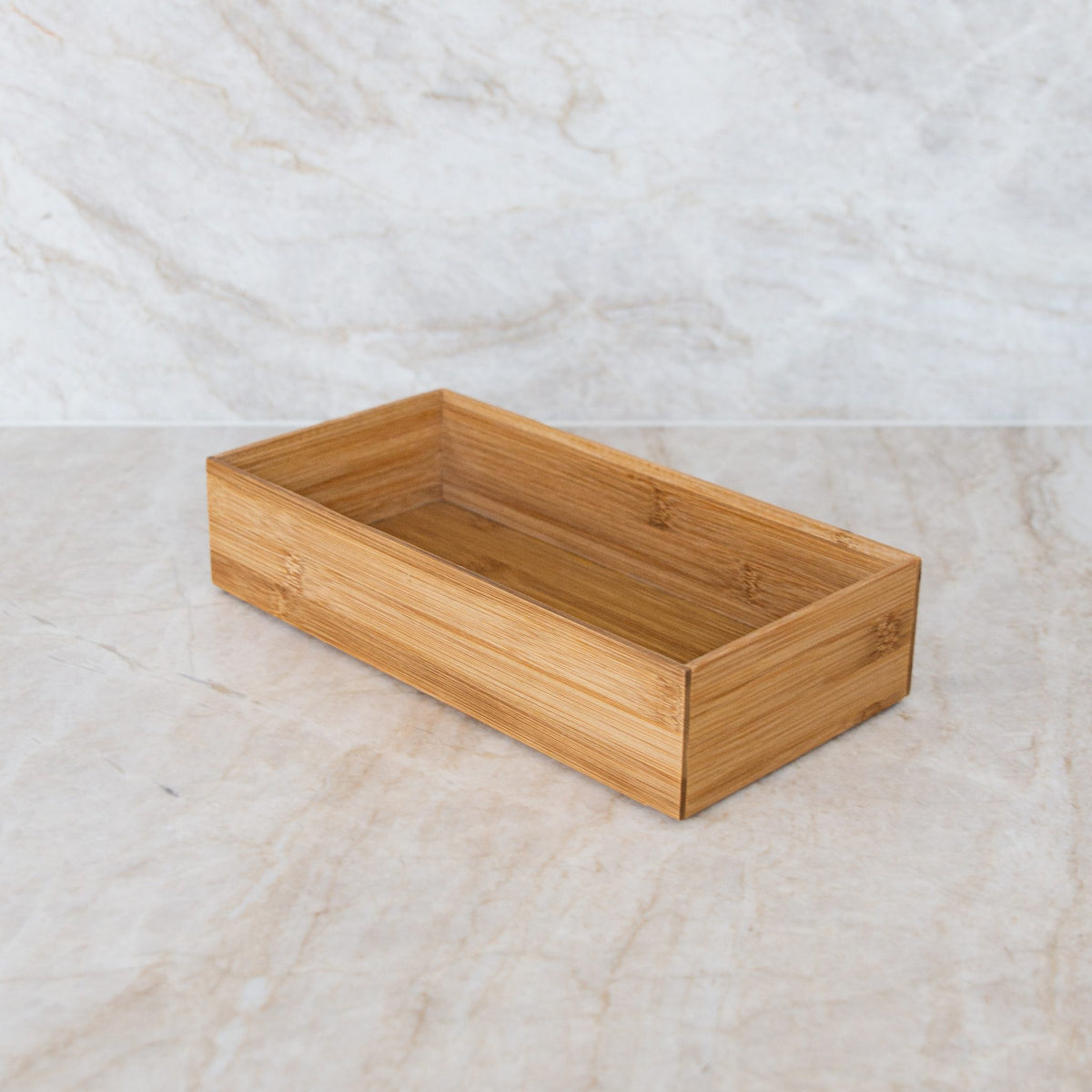
Loose socks, underwear, and t-shirts tend to get mixed up in the drawer. A drawer divider gives each item its own small space, so you can see everything at once when you pull out the drawer. See the possibilities in the drawer divider category.
Protection for delicate clothes
Suits, dresses, and fine clothes you don't wear daily are best kept in a garment bag. It keeps dust away and protects the fabric, while the clothes remain easily accessible on the rail.
How do you make room for shoes in the wardrobe?
Shoes quickly take up space, and when they're in a pile, you lose track of what you even have. Give them a fixed spot at the bottom of the wardrobe or on a shelf, where each pair has its own place.
A stackable shoe box keeps shoes clean and dust-free, and because the boxes can be stacked, you utilize the height in the closet instead of just the floor space. If you have many pairs, you can gather everything in the shoe storage category, so the shoe zone has one cohesive system.
How do you utilize the space you usually forget?
Most wardrobes have space that is never used: under the bed and the top of the closet. This is where you can safely store items you need less frequently.
- Under the bed: An under-bed storage bag keeps extra bedding or clothes out of the main wardrobe, freeing up space for items you use daily.
- Top of the closet: Hanging storage utilizes height and provides soft compartments for folded clothes like sweaters and bags.
When less frequently used items move to the outer zones, everyday clothes get breathing room and become easier to manage.
How to keep your wardrobe functional over time
A system only works if it's easy to follow. Therefore, the most important rule is the simplest: put things back in their fixed place immediately. It takes a few seconds at a time and saves you from a big clean-up later.
Natural materials like wood and bamboo also give the wardrobe a calm look that is pleasant to encounter every morning. An organized closet is not just for appearances – it gives you clarity and energy in everyday life, every time you open the door. If you want to build on the tranquility in the entire room, you can find inspiration in the bedroom category.
Frequently Asked Questions
How often should I declutter my wardrobe?
A thorough review a couple of times a year is sufficient if you consistently put things back in place. Fixed spots ensure that clutter never piles up.
Should all hangers be the same?
It's not a requirement, but uniform hangers create a calmer and more organized look, and clothes hang more evenly. It also makes it easier to fit more items on the rail.
How do I prevent the drawer from getting messy again?
Use a divider so that each type of clothing has its own compartment. When there's a fixed place for socks, underwear, and t-shirts separately, it's easy to put them back correctly.
Can I functionally organize a small wardrobe?
Yes. Utilize height with stackable boxes and hanging storage, and move items you rarely use under the bed. This frees up space for everyday clothes, even in a small closet.