
A well-thought-out spice rack makes cooking calm and efficient. When every can and jar has its fixed place, you quickly find what you use most and avoid duplicate purchases. The key is uniform containers, clear labeling, and a placement that suits your routines. Here's a practical guide to creating a simple system that both looks good and works in everyday life.
Spice jars in a uniform design
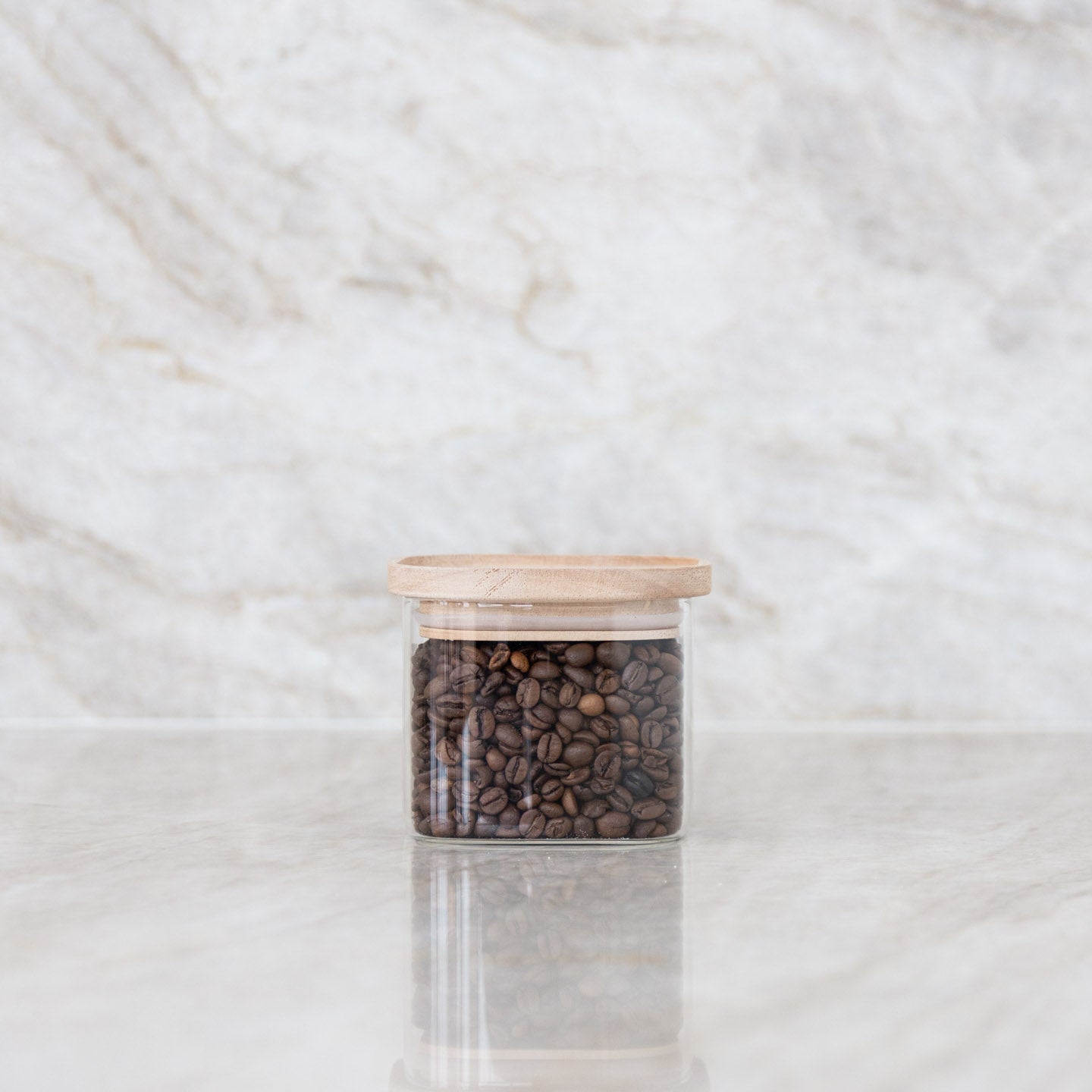
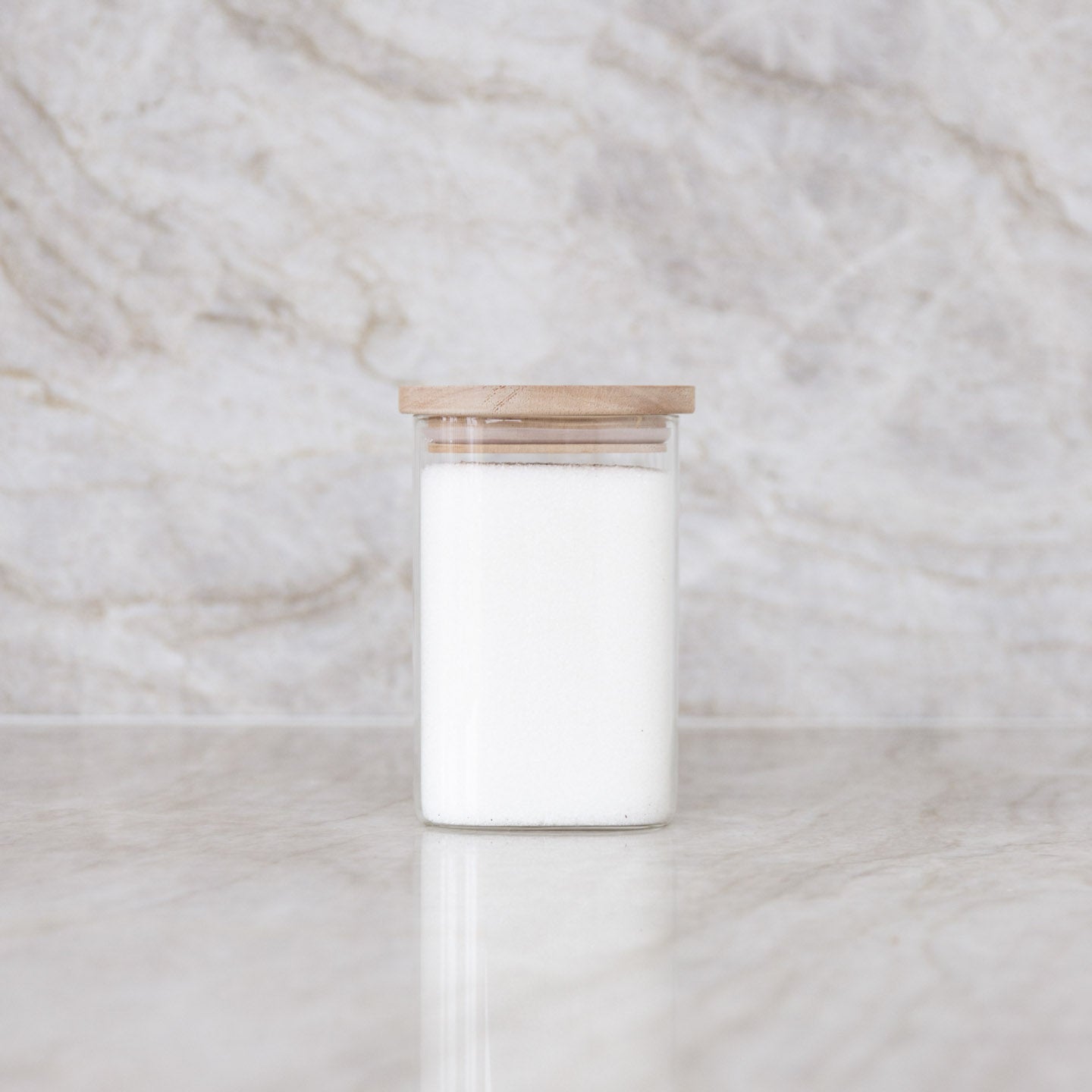
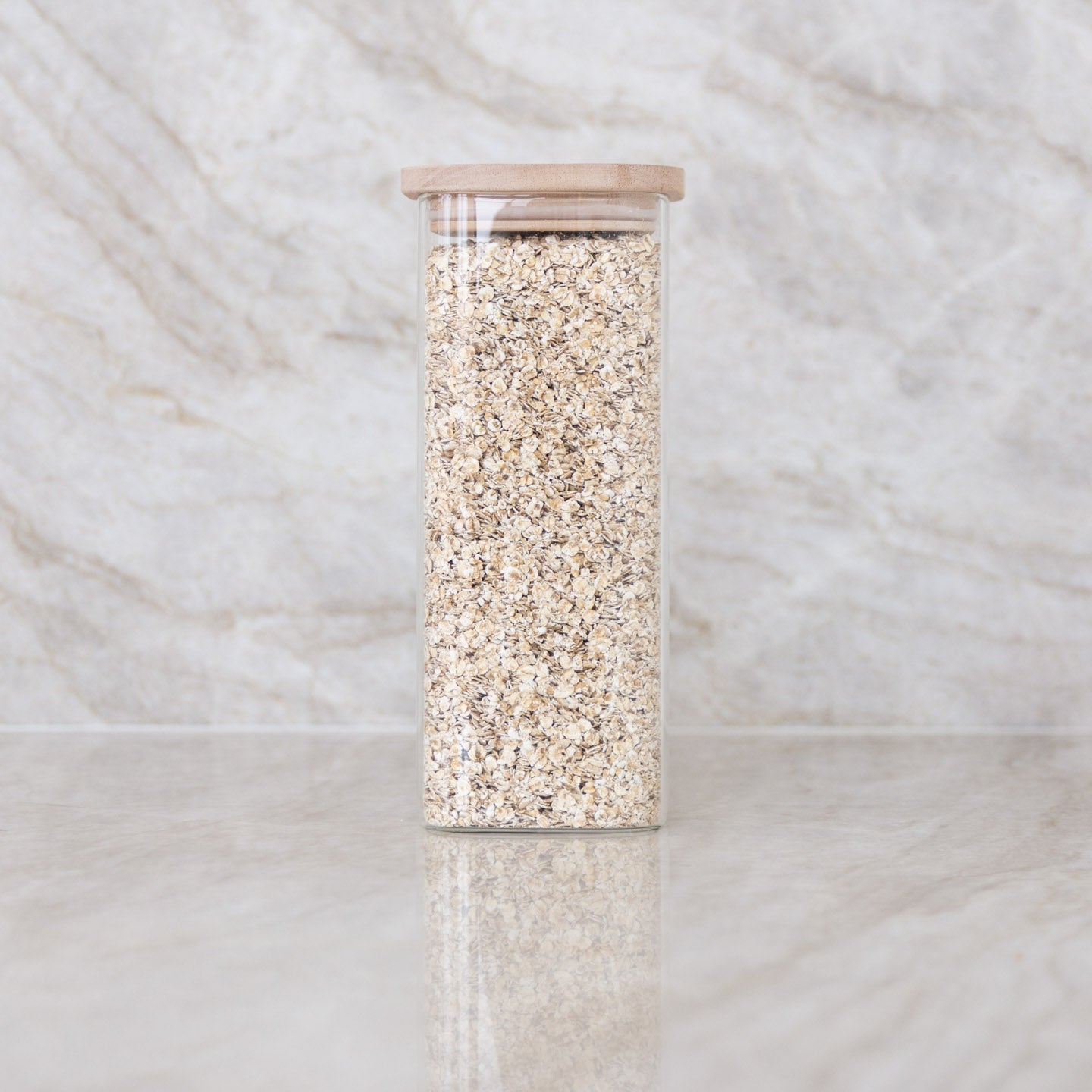
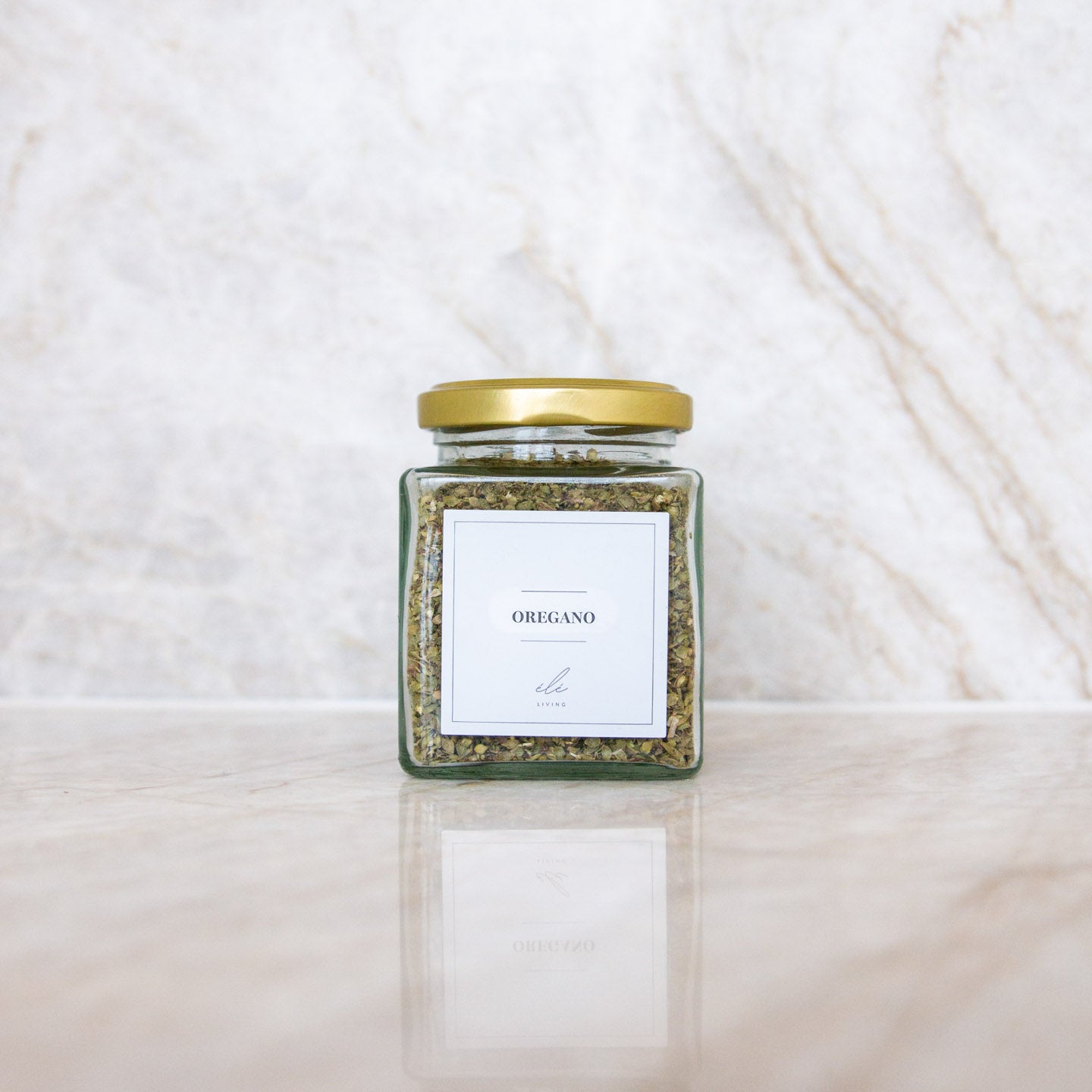
Uniform jars create a calm expression and make it easier to maintain an overview. Choose a size that suits your quantities and stick to a few variants. Transfer loose spices into jars so you can see the contents and easily assess when to refill. A good starting point is to gather your spice jars and accessories in one place, so lids, funnels, and extra jars are always at hand.
Placement in a cupboard, drawer, or on a wall
Place spices where you naturally reach during cooking.
- On a shelf: Place the most used spices at the front and at eye level.
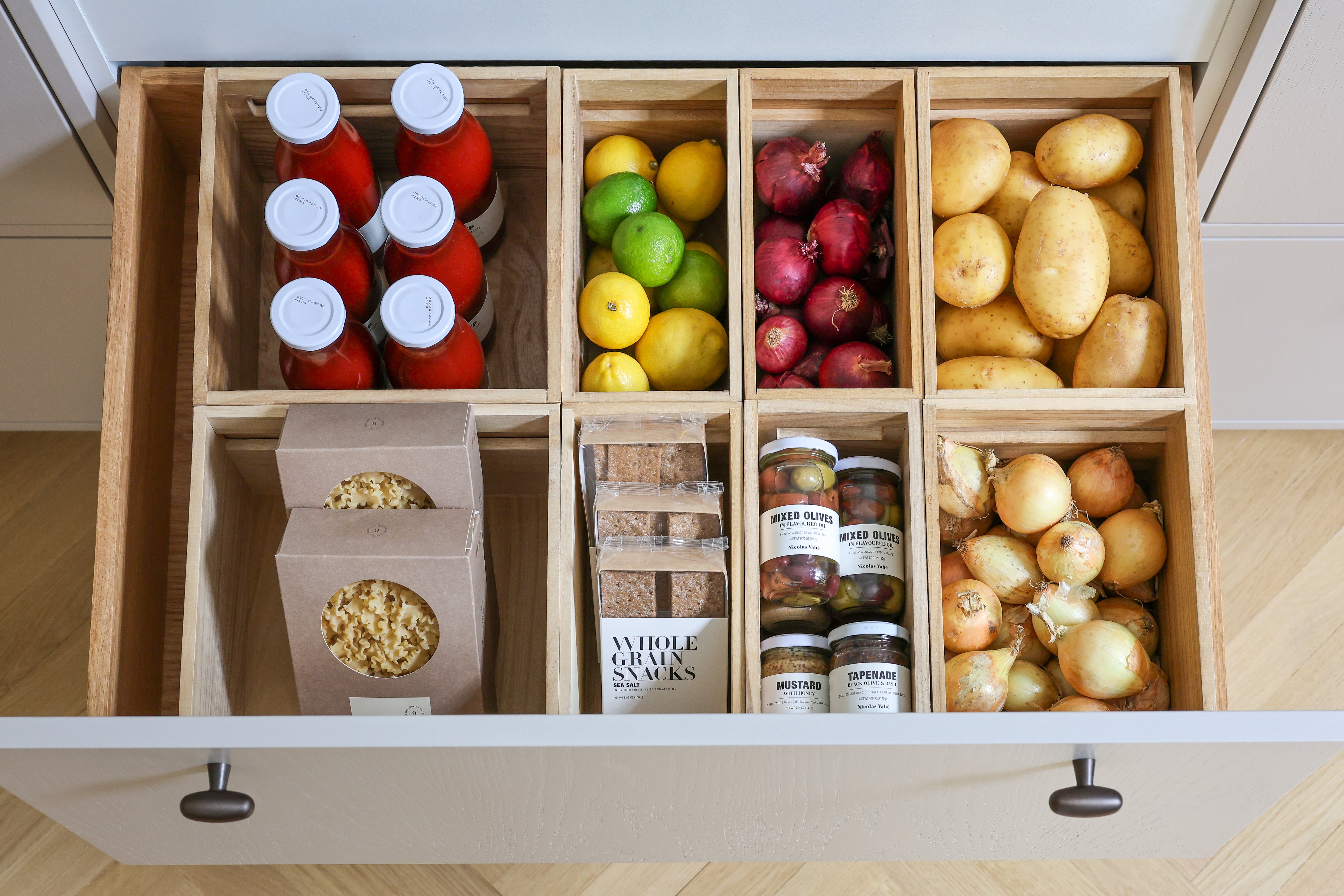
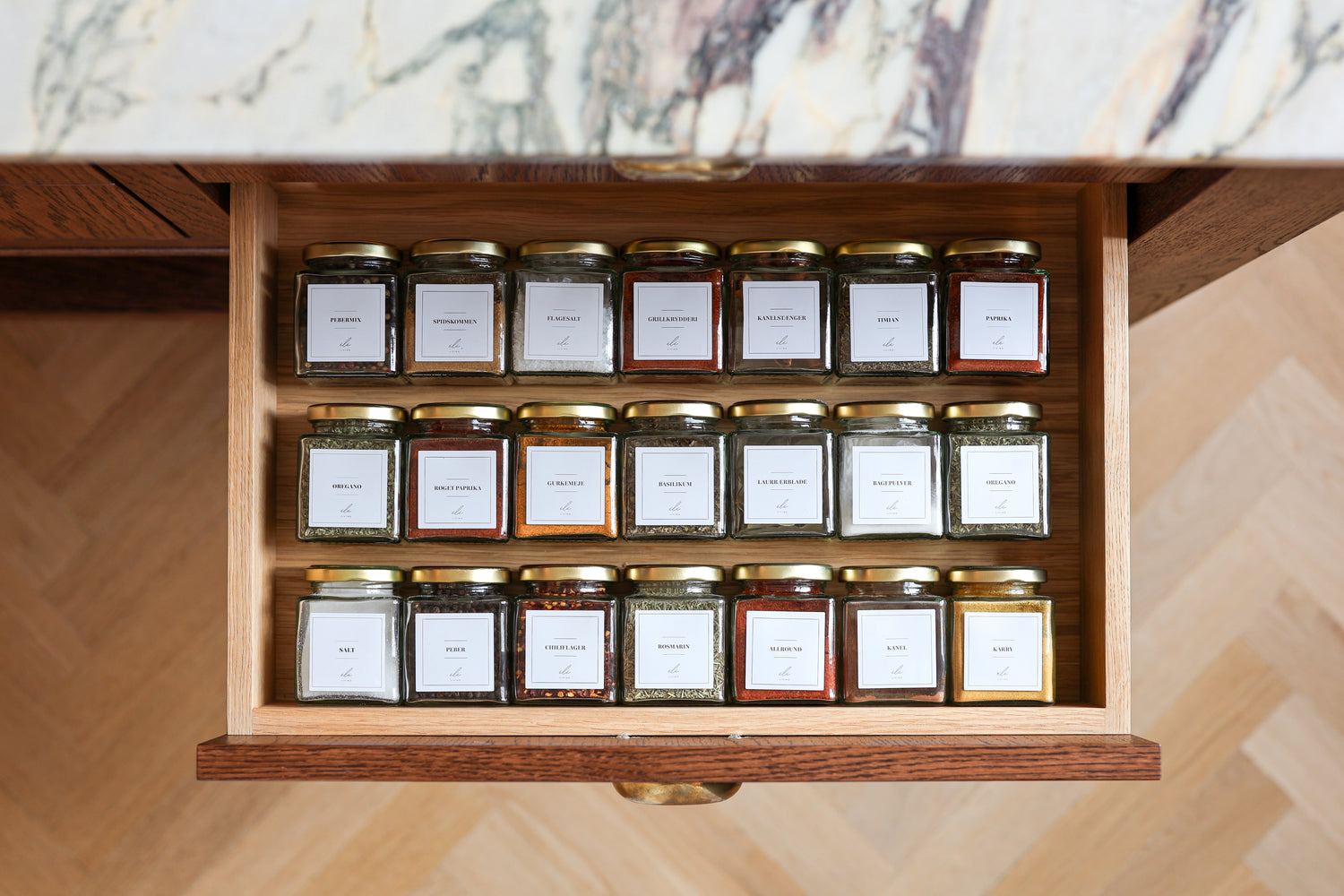
- In a drawer: Arrange the jars in rows, so the label or lid points upwards for quick reading.
- On a wall: A narrow shelf close to the stove saves steps.
Avoid steam and direct heat, and maintain a logical order - for example, by frequency or kitchen zones such as “daily”, “baking”, and “strong blends”.
Turntable for corner cabinets and deep shelves
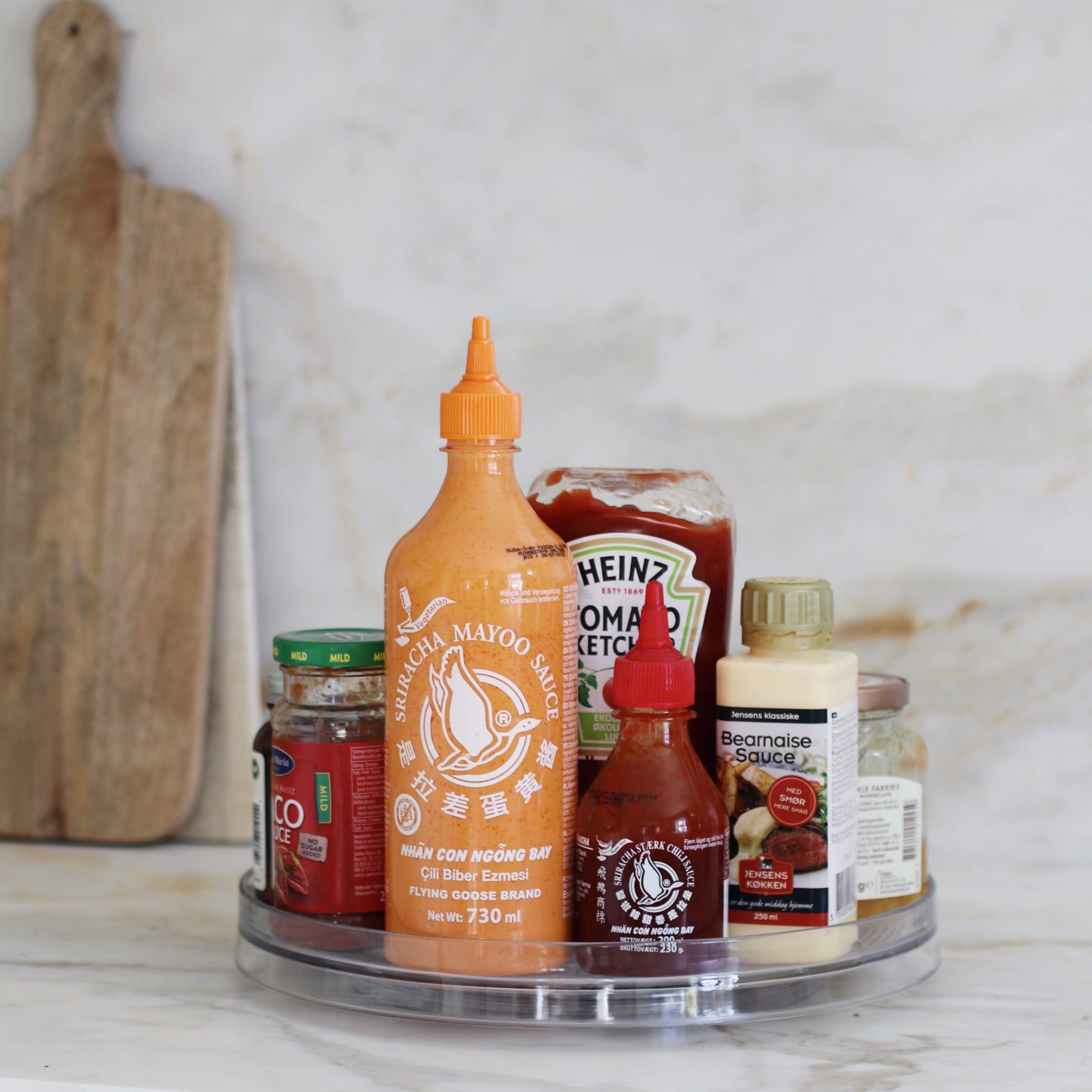
A turntable gathers spices, allowing you to rotate to the correct jar without moving the entire row. This is particularly useful in corner cabinets or deep shelves, where the back row would otherwise be difficult to reach. A low-rimmed plastic turntable makes it easy to see the labels, for example, low-rimmed plastic turntable.
How to organize on a turntable
Choose what lives on the turntable
- Bottles: Gather oil and vinegar on the same turntable as spices to keep flavorings together.
- Spices: Place daily spices at the front and rotate the turntable when you need rarer blends.
- For serving: Keep salt and pepper here, so they are easy to take to the table.
Labels and categories that create calm
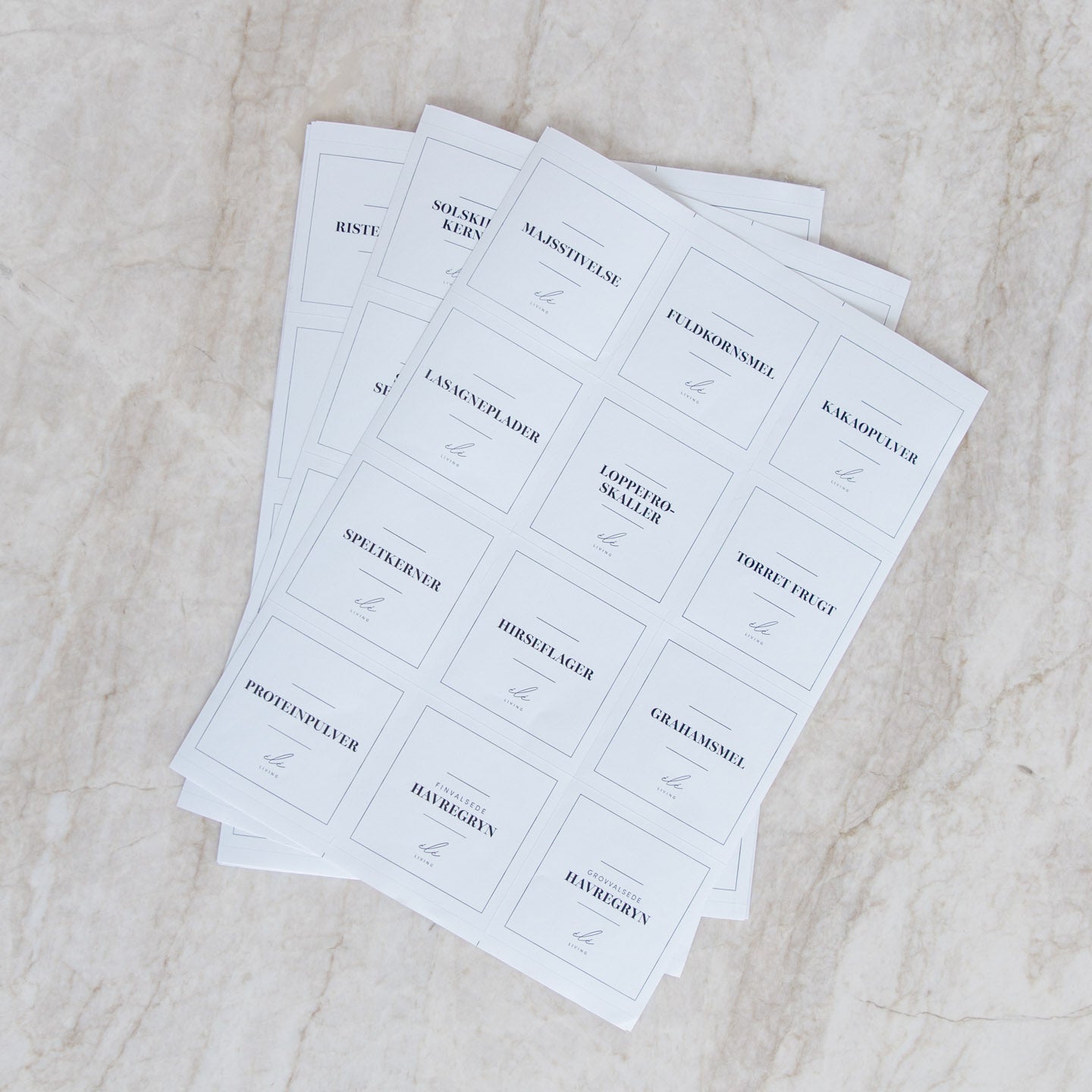
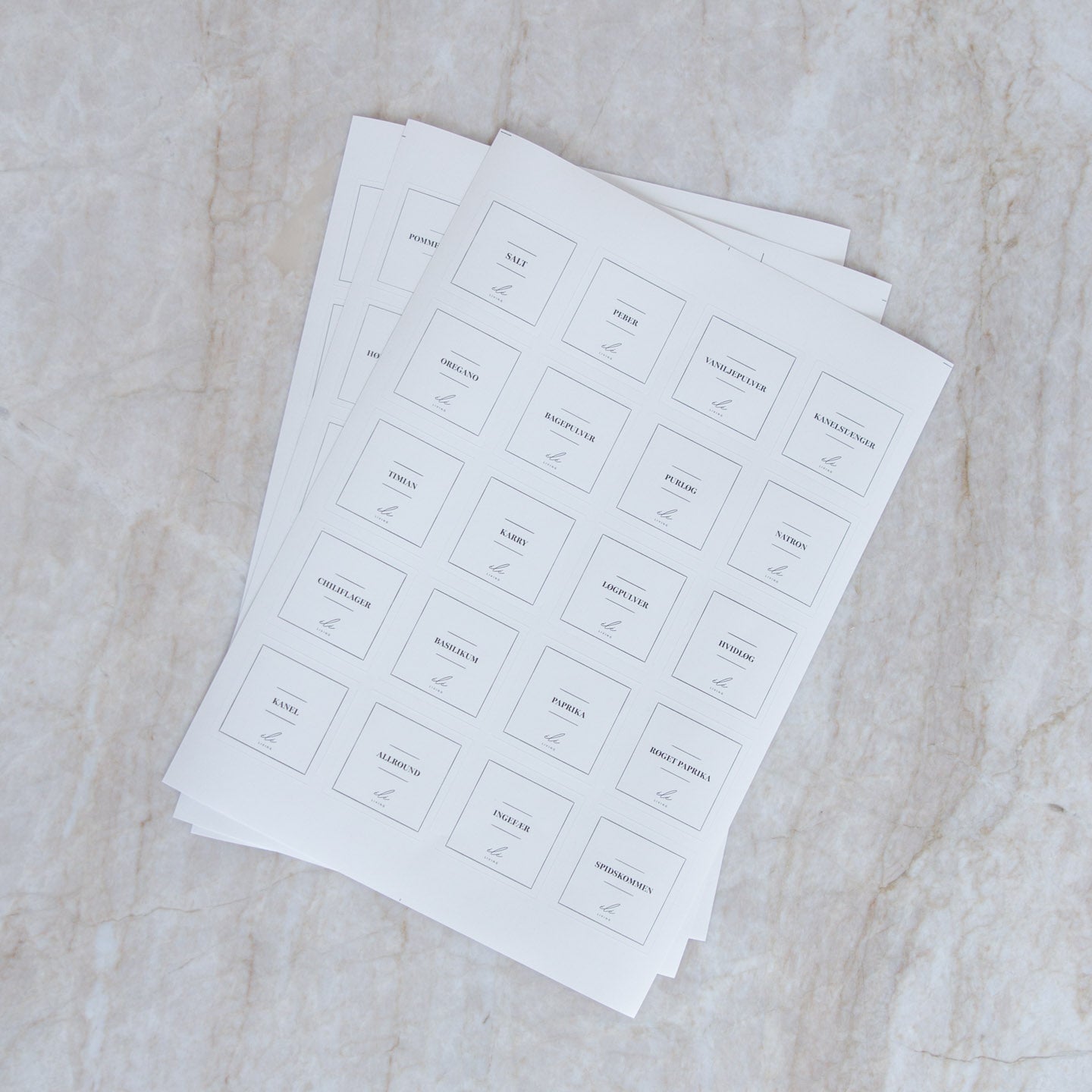
Clear categories make it easier for the whole family to put spices back in the same place. Start with 3-4 main groups and adjust according to your cooking. Put visible names on the jars - preferably on the lid or front - so you can read from your angle. A simple solution is spice labels, which provide a uniform line and save time in everyday life.
Start easily with a complete solution
If you want to achieve results quickly, a complete package with matching jars and labels can be a shortcut. Here you get the same look on the entire shelf from day one and avoid assembling the parts individually. See for example package solution with spice jars and labels.
Once the shelf is set up, plan a fixed, short routine: refill jars when they are 1/3 empty, place new spices at the back of the row, and move the oldest ones forward. This maintains flow and protects the overview.
Fine-tune the system to your daily life
Let the arrangement reflect what you actually use. If you often make quick everyday dishes, place salt, pepper, paprika, and curry at the front. If you bake often, a separate row or a small zone at the lowest level can gather cinnamon, cardamom, and vanilla. Maintain fixed distances between rows so you can easily grab a jar without bumping into the others. And when a category grows, expand in the same direction instead of mixing in the middle of the system - this preserves the calm in the expression and makes it easy to tidy up.