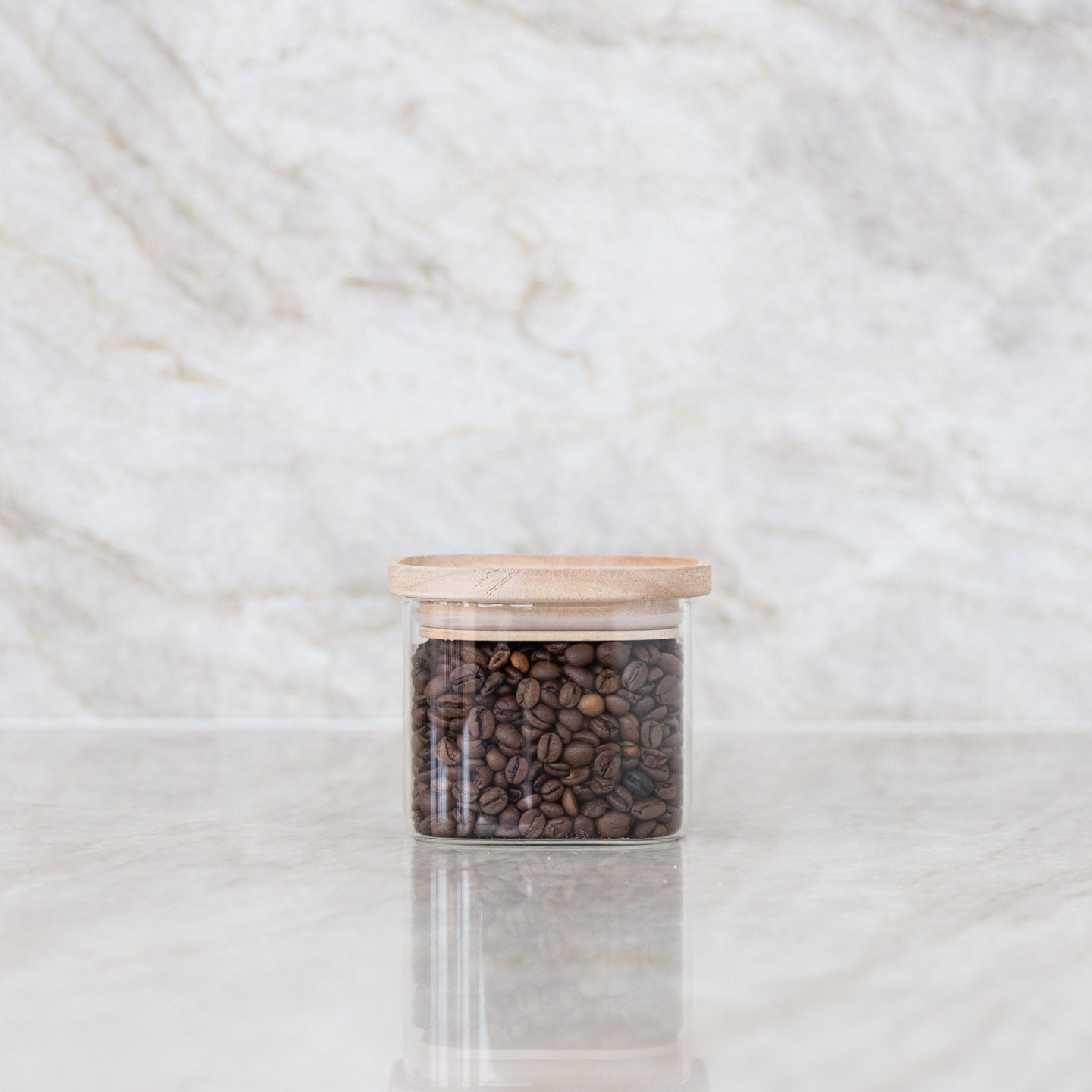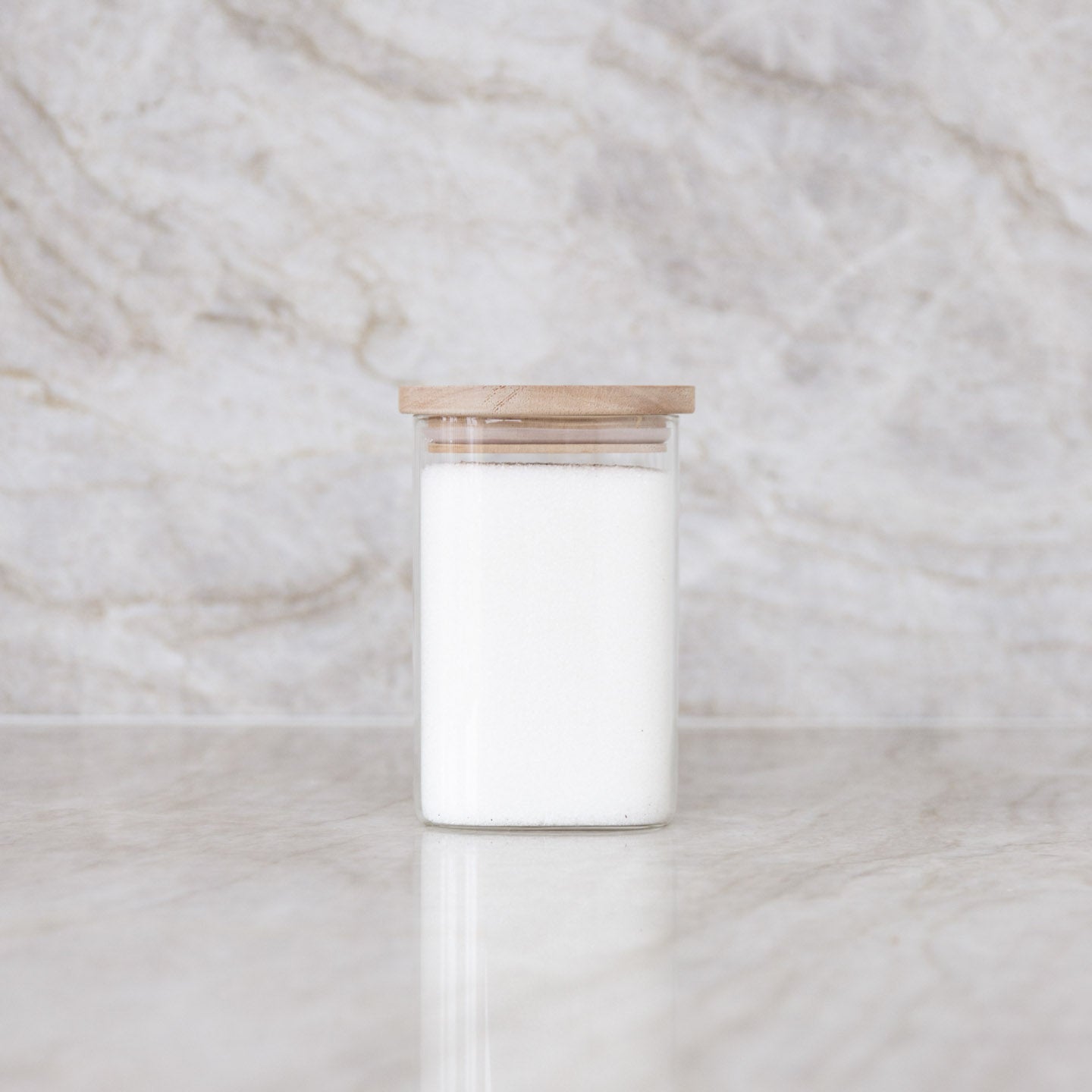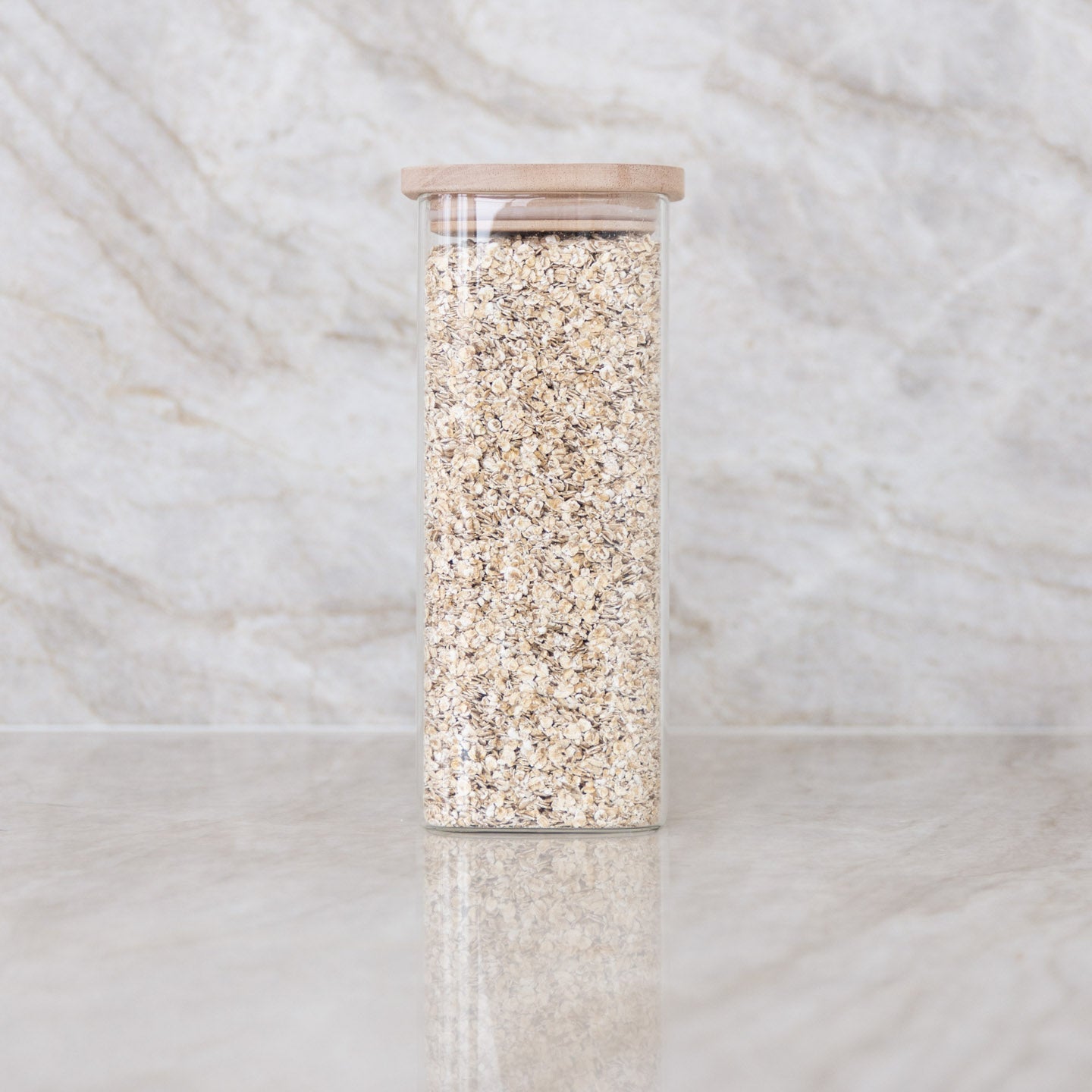


Kitchen storage boxes make it easy to create designated places, so everyday routines run more smoothly. When you group related food items and utensils in clear zones, it creates calm and a natural flow in the room. Think in simple systems with a few repeating sizes and transparent materials, so you can quickly see the contents. Start in the areas you use most - drawers, cabinets, and the refrigerator - and build on it gradually. The goal is not perfection, but an overview that lasts in everyday life.
Boxes for Cabinets and Drawers
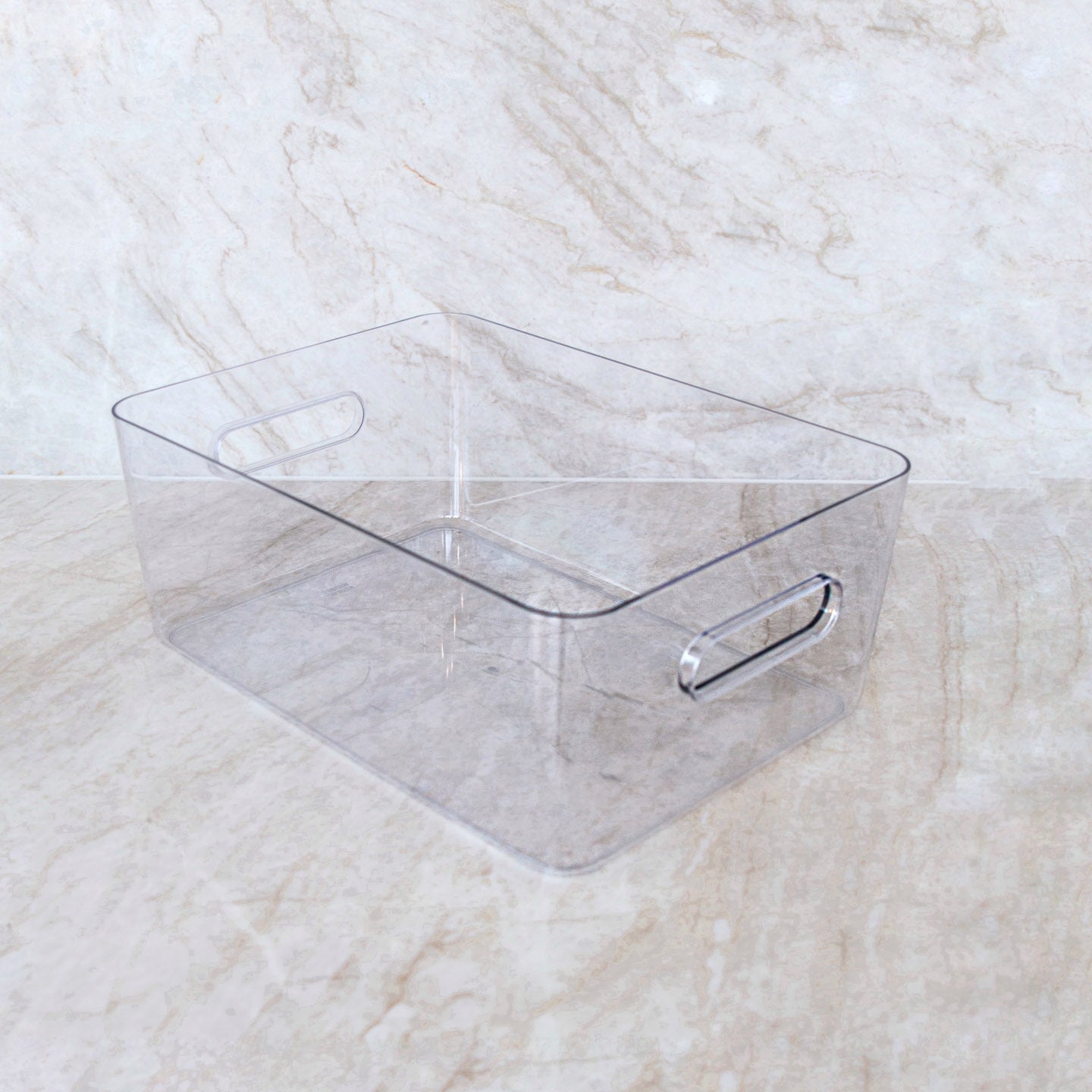
Boxes make it easy to keep track of baking equipment, lunchbox supplies, lids, and plates. Choose a few sizes and repeat them, so they are easy to stack and rearrange. Place boxes at the front of deep cabinets, so you can pull them out, get an overview, and push them back in. Create a designated place for the things you use daily, and a separate zone for less frequent use. A good starting point is to group everything that is used together in the same box. See the selection of boxes.
How to Create Zones
Start by emptying a cabinet and grouping by activity, e.g., baking, lunchboxes, or serving. Measure the shelves, choose 2-3 box sizes, and fill them so they stand stably. Place the most used boxes at reach height.
Storage Jars for Dry Goods
Replace bags with jars to avoid spills and get an overview. Storage jars are practical for flour, cereal, pasta, nuts, and snacks, and the transparent material makes it easy to see when they need refilling. Square jars often utilize space better in cabinets than round ones, and they are good at keeping pests out. Group jars in rows by category, and place the most used ones at the front. See the collection of storage jars.
Place by Use
Place staples like oats and rice at the front, and put less frequent items at the back. Stick to uniform lids and a few sizes for a calm look.
Spice Jars and Lazy Susans
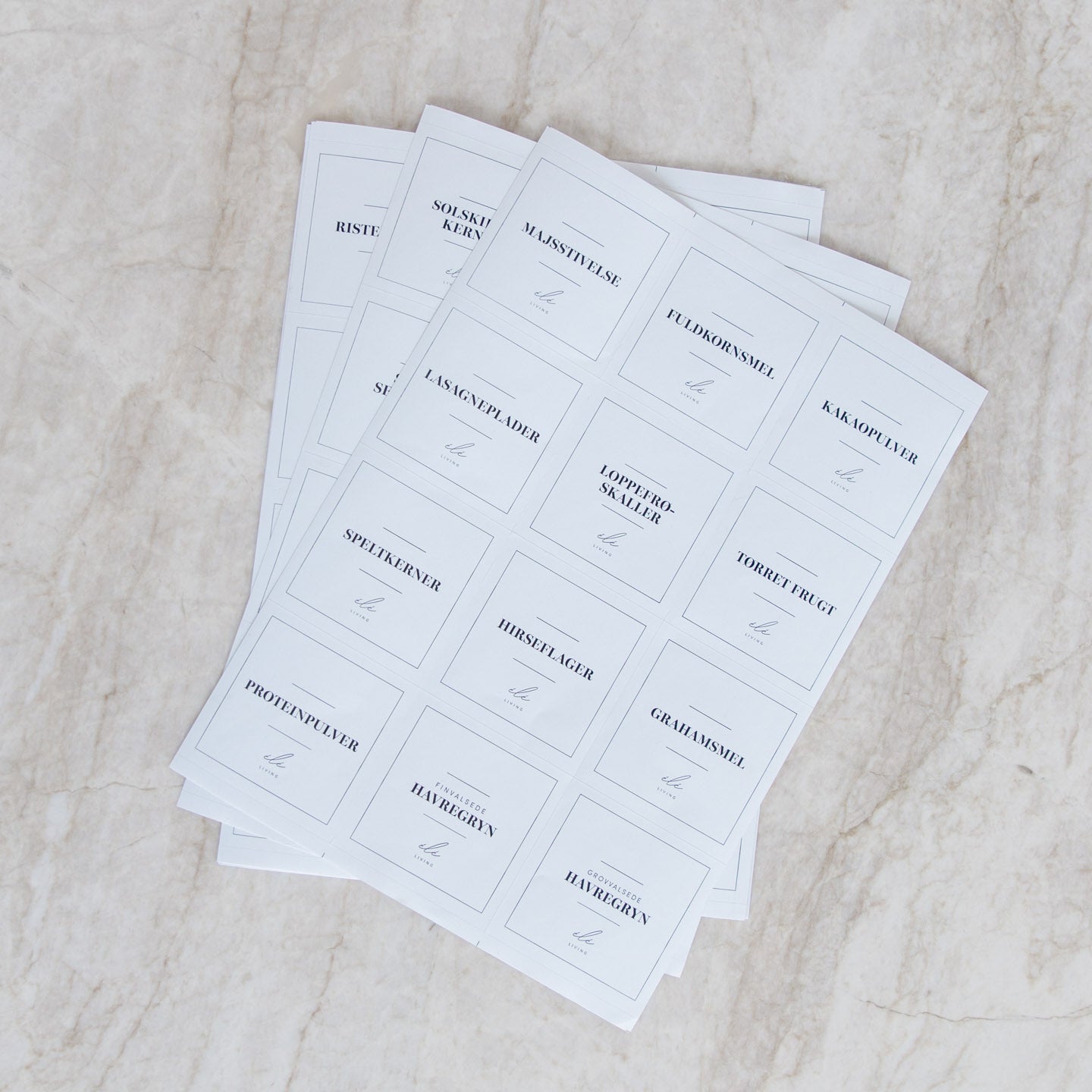
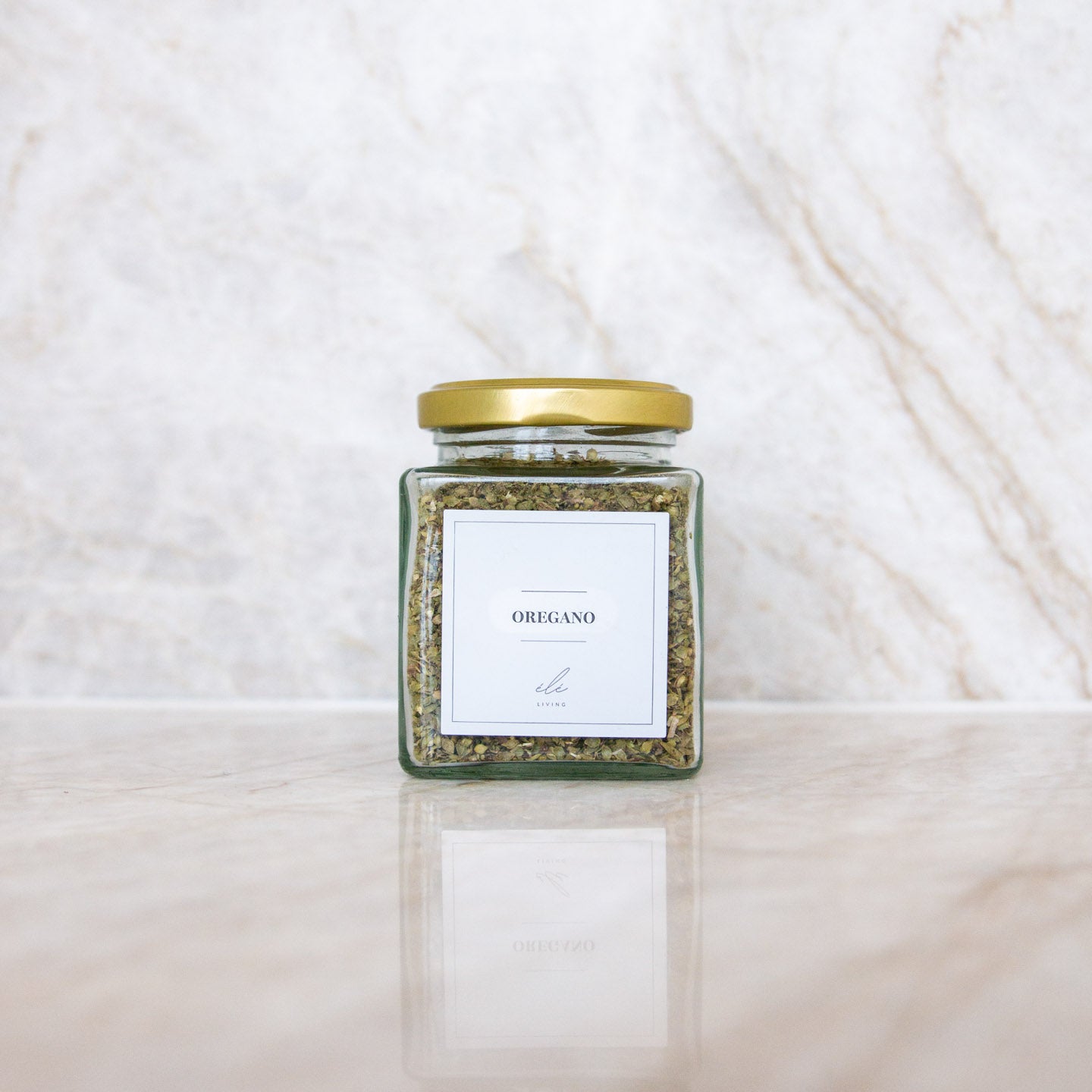
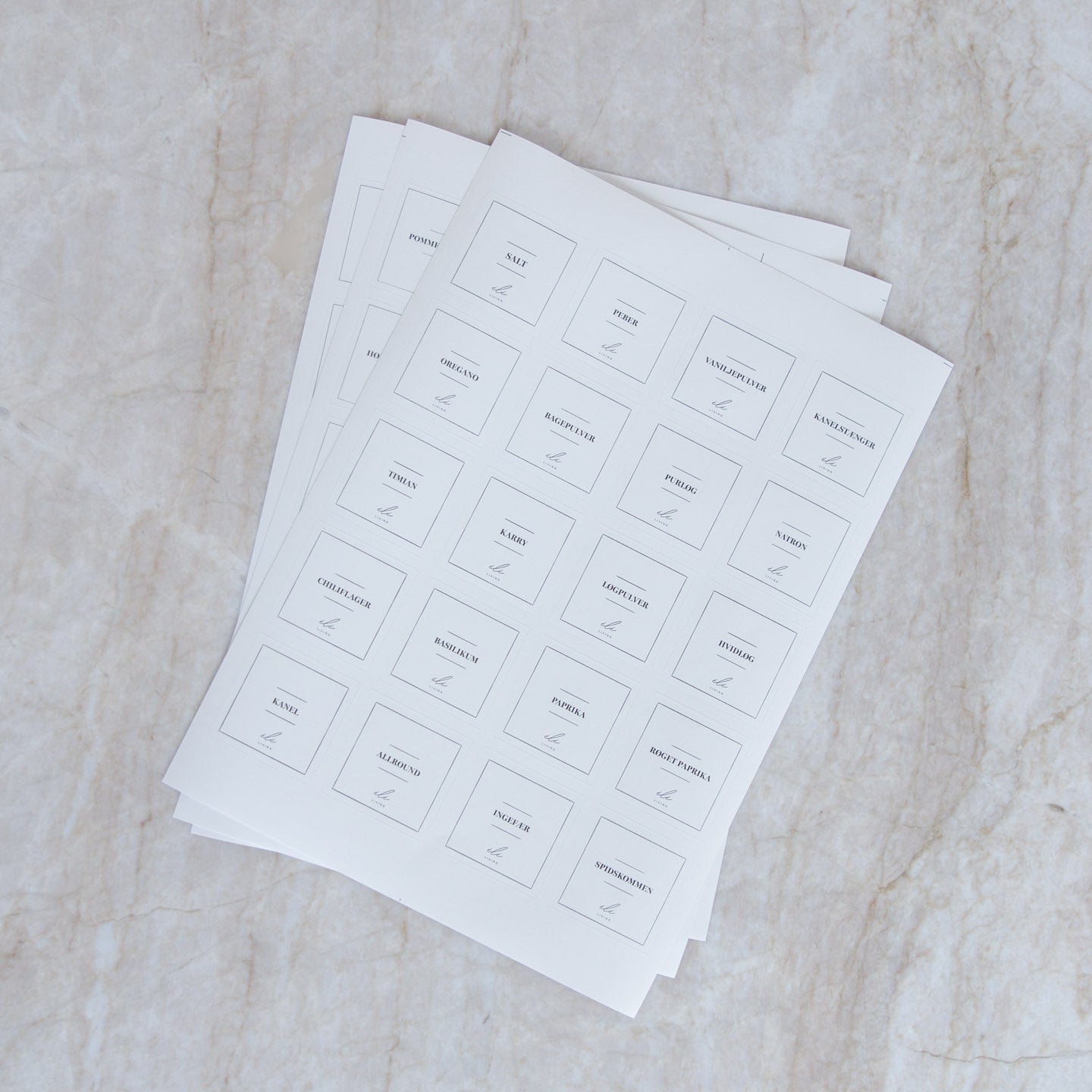
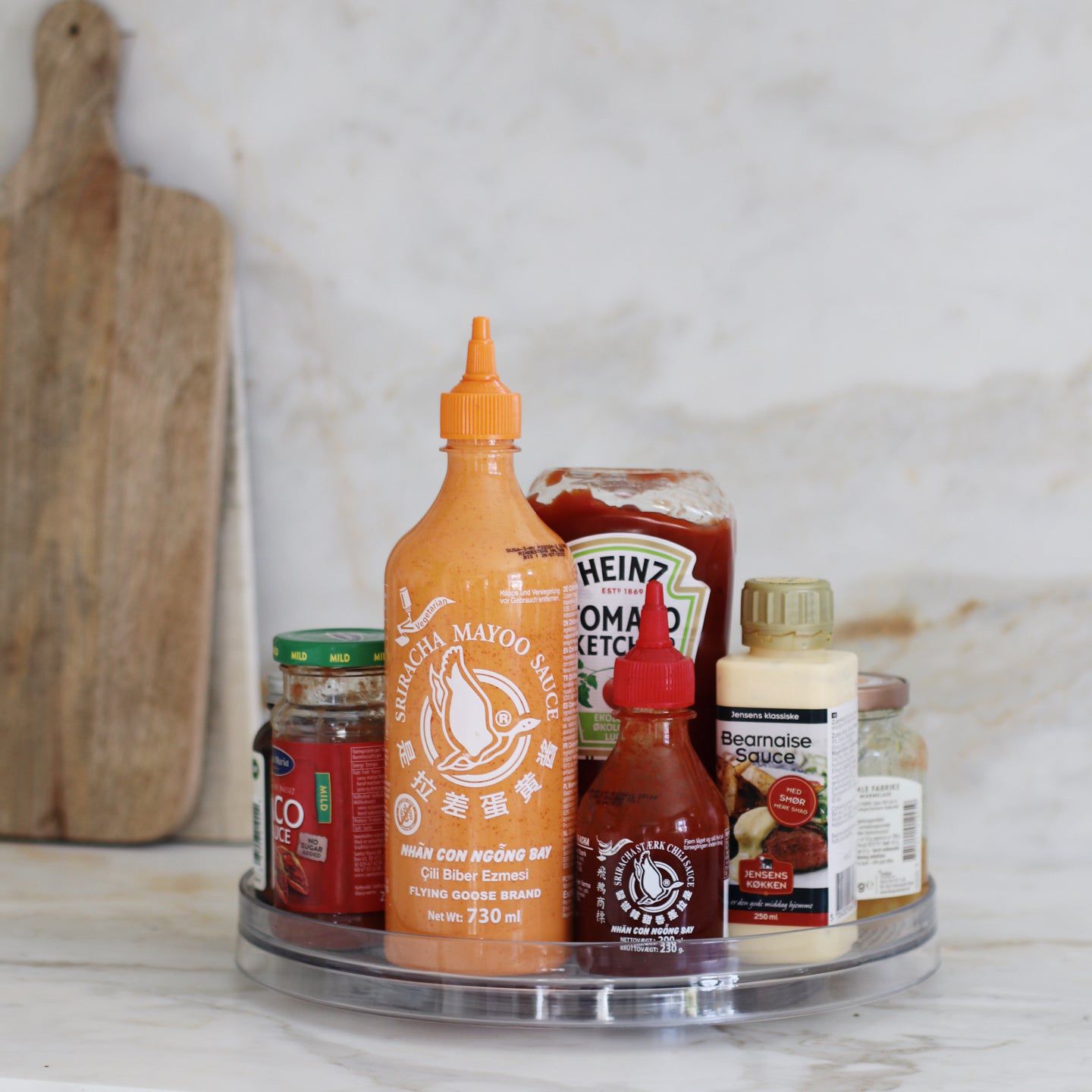
Spices become much easier to use when they are grouped in uniform jars and can be reached with a single grab. A lazy susan provides good access in tall cabinets or on a shelf where you cannot reach all the way in. Sort by type - baking, grilling, staples - and write clear names on the lid or the front of the jar. Find spice jars and accessories. If you want to create full overview on a deep shelf, a lazy susan can be a simple solution.
Make Everyday Life Easier
Place the spices you use most often at the front of the lazy susan. Group refills at the back, so you can refill in one workflow.
Refrigerator Boxes for Fresh Food
Refrigerator boxes group loose food items in clear groups and make cleaning and rotation easy. Place the boxes on shelves - they are not intended for the doors - and use lids when you want to stack to utilize the height. When you pull out a box, you quickly see the contents and easily put it back in place. Boxes with separately purchased lids can be used in both the refrigerator and freezer, so you can move leftovers directly between zones. See the options for refrigerator.
Choose What Lives in the Box
- Snacks and condiments: small boxes group small items, so they do not clutter the shelf.
- Dairy products: medium boxes give an overview of yogurt, crème fraîche, and opened cheeses.
- Fruit and vegetables: larger boxes for what takes up the most space, so the shelf is kept tidy.
Storage Containers for Leftovers and Meal Prep
Storage containers are practical for prepared meals, side dishes, and leftovers. Choose transparent containers with lids, so you can stack and see the contents. Divide by meals - e.g., lunch, side dishes, proteins - and place the containers in the same zone, so they are easy to take to the table or bag. Storage containers can be used in both the refrigerator and freezer, which gives flexibility in planning. See the selection of storage containers.
A Simple Routine That Lasts
Set aside a fixed time to refill, check dates, and move the oldest to the front. When the places are fixed, it takes a few minutes to keep the system up to date.