
Smart shoe storage isn't just about getting pairs off the floor. It's about creating a calm, organised, and functional home where you can easily find the shoes you wear every day. When shoes have a designated spot, the hallway, wardrobe, and cupboard become more inviting, and you avoid loose pairs accumulating in the wrong places.
At élé living, we focus on organisation that makes everyday life easier and the home more harmonious. For shoes, you can benefit from using solutions designed for the wardrobe, with the goal of creating a clear overview of shoes, clothes, and accessories in a simple and aesthetic way.
Shoe storage in the hallway
The hallway is often where shoes quickly pile up. Start by deciding how many pairs should actually be kept here. The shoes you use most often should be the easiest to access, while the rest can be placed in the wardrobe or a cupboard.
A good rule of thumb is to give each family member a designated zone. This makes it easier to tidy up, as everyone knows where their shoes belong. If you have limited floor space, you can think vertically with shelves or dividers, so shoes aren't stacked in multiple layers in front of each other.
Organising shoes in the wardrobe
In the wardrobe, it's beneficial to sort shoes by use rather than just by type. Place everyday shoes at eye level or within easy reach, and store pairs you use less frequently further away. This way, you avoid searching for the same pair again and again.
When organising shoes, you can work with three simple principles:
- Most used: Place your regular favourites in the most accessible spot.
- Same category: Group sneakers, dress shoes, and slippers separately.
- Fixed number: Only keep the pairs you actually use, so your storage doesn't overflow.
This creates a calmer look and makes it easier to maintain order over time.
Storing shoes in boxes
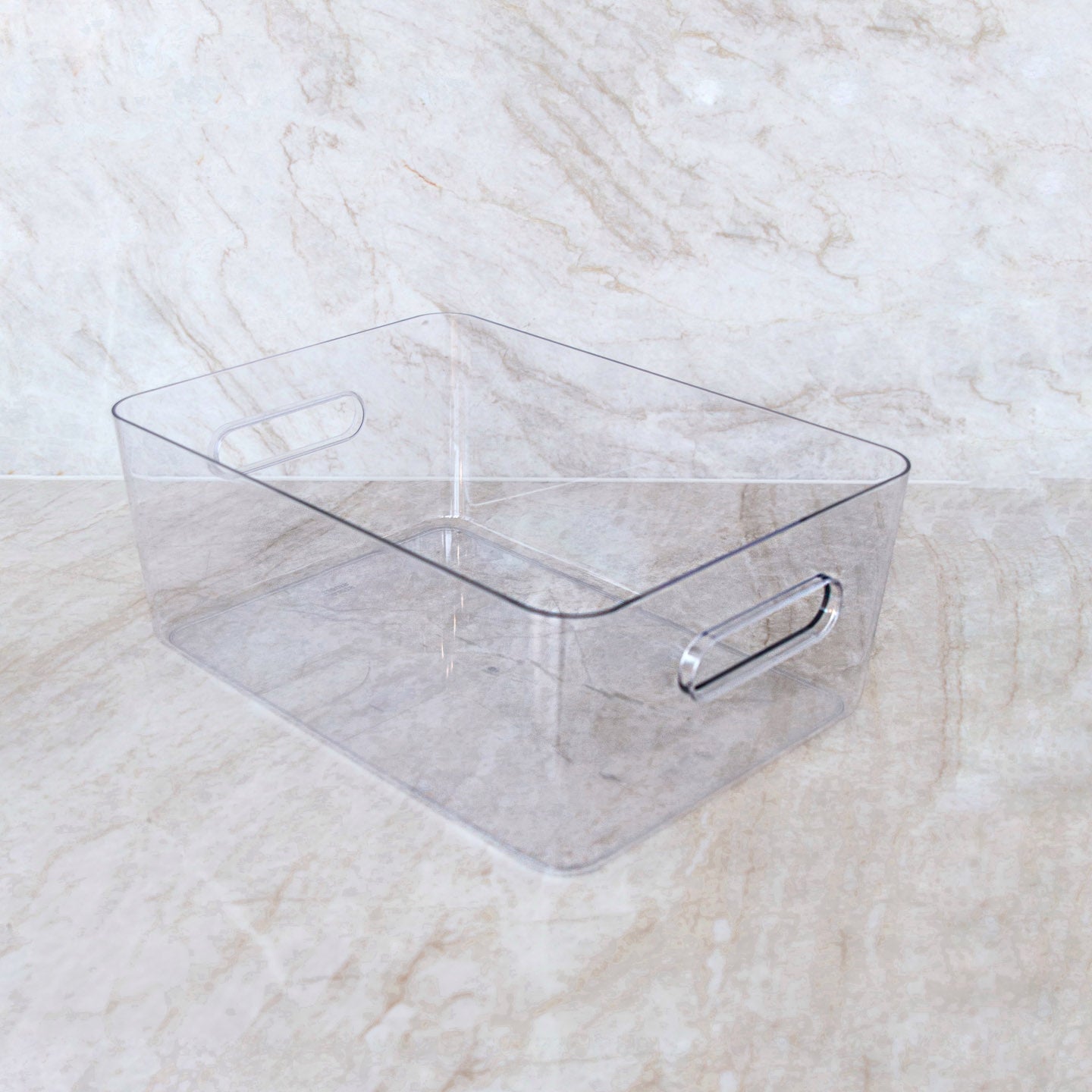
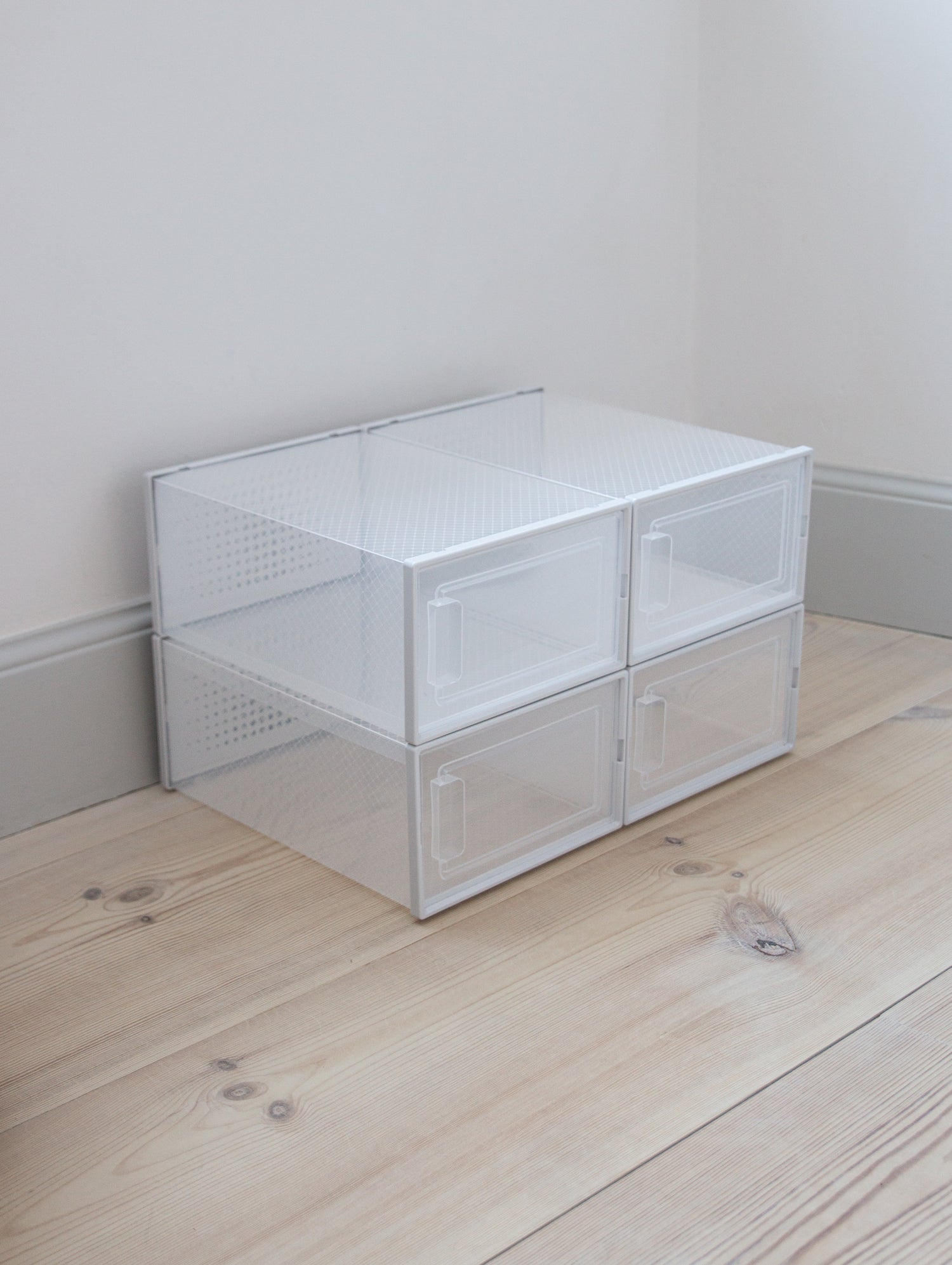
If you want to store shoes more discreetly, storage boxes can be a practical solution. Boxes can be particularly relevant if you want to store shoes at the bottom of the wardrobe, on a shelf, or in a cupboard where they might otherwise easily topple over.
Choose boxes based on the space you have and how many pairs you want to store in the same place. Smaller boxes might be suitable for individual pairs or children's shoes, while larger boxes can be used for several light pairs, if it suits your decor. Avoid overfilling the boxes to the point where you lose track. The most important thing is that you can easily take shoes out and put them back again.
Small hallways require a simple plan
In small hallways, it's especially important to be consistent. If all shoes are allowed to stay out, the space can quickly look cluttered. Therefore, choose a clear limit for how many pairs are allowed in the hallway at one time.
For example, you can reserve space for shoes used daily and move the rest to the wardrobe. This creates space around the entrance and makes it easier to get in and out without tripping over shoes. A tidy first impression can also make the home more pleasant to enter.
Create calm with fixed routines
Smart shoe storage works best when the system is simple enough to be used every day. Make it a habit to put shoes away when you come home, and quickly tidy up if too many pairs accumulate.
You can also review your shoes regularly and remove those that no longer fit, are not used, or don't have a designated place. This follows élé living's approach of not filling the home with more than is needed. When each pair has a function and a fixed location, shoe storage becomes practical, neat, and easy to maintain.
If you want to see more options for home organisation, you can explore all products and find solutions that fit your wardrobe, hallway, and other storage needs.