
Yes, eggs can indeed get too old in the refrigerator. They last a long time, but not forever. Over time, air penetrates the shell, the white becomes more liquid, and eventually, the egg is no longer good to use. The good news is that with a few simple tricks, you can quickly check if an egg is still fresh, so you avoid throwing out good eggs in doubt – and avoid using ones that have become too old.
How long do eggs actually last in the refrigerator?
As a rule of thumb, eggs last several weeks in the fridge when stored correctly. Most eggs are stamped with a date, which is your best starting point. Even after this date, eggs can often be used for a while longer if they have been kept cold the entire time – but here you should check the freshness yourself before using them.
The Danish Veterinary and Food Administration recommends that you store eggs in the fridge for both shelf life and food safety reasons. At room temperature, there is a greater risk of bacteria growing, so the eggs lose their freshness faster outside the refrigerator.
What makes eggs get old is not just time, but also air. The shell is porous, and gradually some moisture evaporates while air seeps in. Therefore, the air pocket in the rounded end of the egg grows the older it gets – and this is exactly what the well-known water test utilizes.
How do you test if an egg is too old?
The easiest test is the water test. It only requires a glass or a bowl of cold water:
- The egg sinks and lies flat: fresh and perfectly fine to use.
- The egg sinks but stands up a bit at one end: a bit older, but still good – try to use it soon.
- The egg floats to the surface: the air pocket has become large, and the egg is likely too old. Discard it.
The reason is simple: the larger the air pocket becomes with age, the more buoyancy the egg gets. A perfectly fresh egg has almost no air and therefore sinks to the bottom.
Use smell and appearance as an extra check
If you are still in doubt after the water test, you can crack the egg onto a plate before using it. A fresh egg has a firm, intact yolk and a clear, viscous white. If the white becomes very thin and spreads out completely, the egg is older. And if the egg smells sulfurous or unpleasant, it should be discarded immediately – the smell is the clearest sign of a spoiled egg.
Why does the placement in the refrigerator matter?
Where you put the eggs actually influences how long they last. Many people put eggs in the door, but that is also where the temperature fluctuates the most every time the refrigerator is opened. A more stable, cold location on a shelf provides the eggs with better and more consistent conditions.
A few specific tips to keep eggs fresh longer:
- Let the eggs stand with the pointed end facing down. This keeps the air pocket at the top and the yolk more centered.
- Place the eggs on a shelf rather than in the door, where it is warmest and most unstable.
- Keep track of the order so that the oldest eggs are used first.
A permanent spot for the eggs makes a bigger difference than most people think. When the eggs have their own place, you don't forget them at the back of the fridge, and you keep an overview of what you actually have at home. An Egg tray for 12 eggs gathers the eggs in one place, keeps them stably in place, and makes it easy to see how many you have left – instead of a half-empty cardboard carton rolling around on the shelf.
How do you create an overview of eggs and fresh groceries?
Old eggs rarely arise because eggs themselves are short-lived – it happens because they disappear in the mess and get forgotten. The best insurance against food waste is therefore a refrigerator where everything has its permanent place and where you can see at a glance what needs to be used soon.
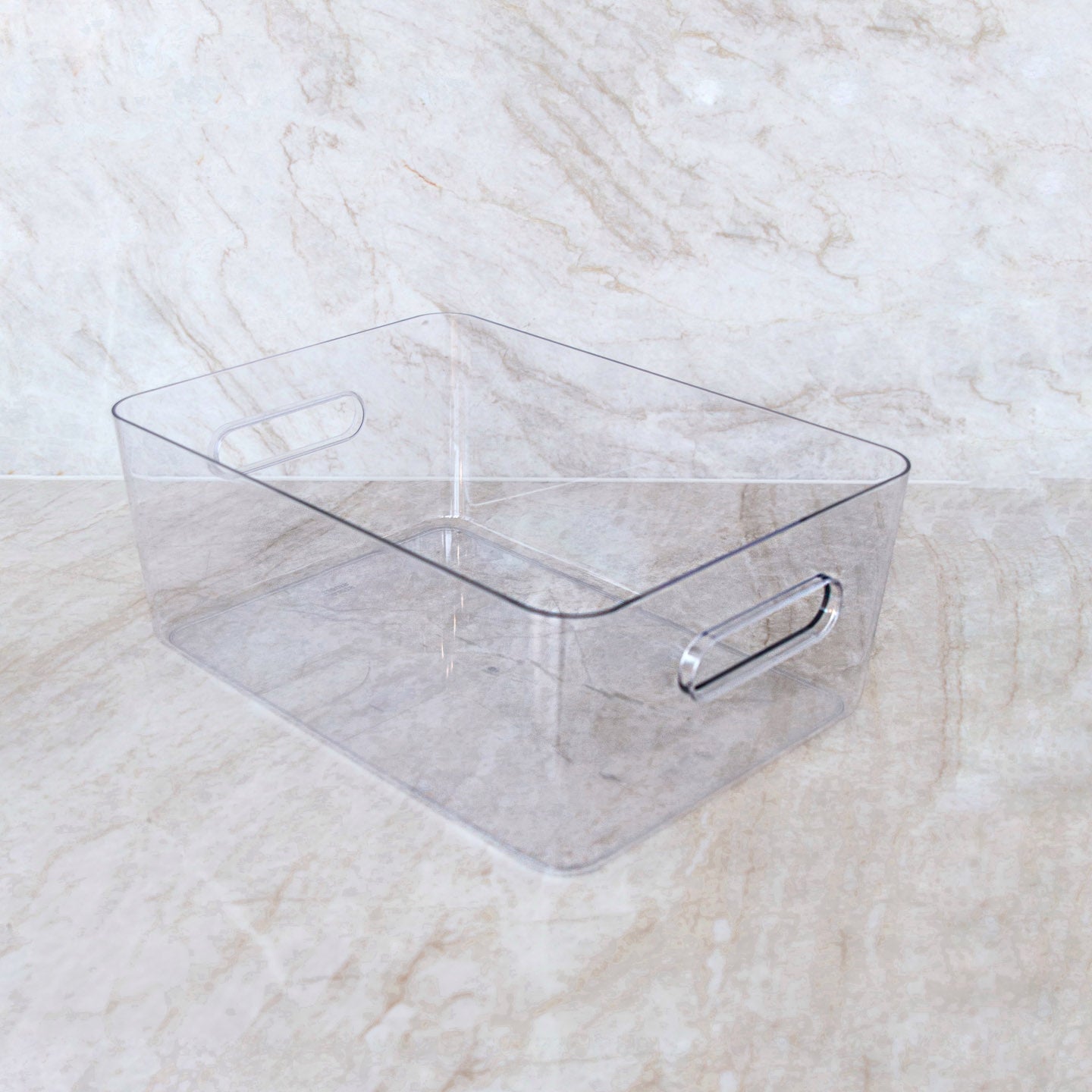
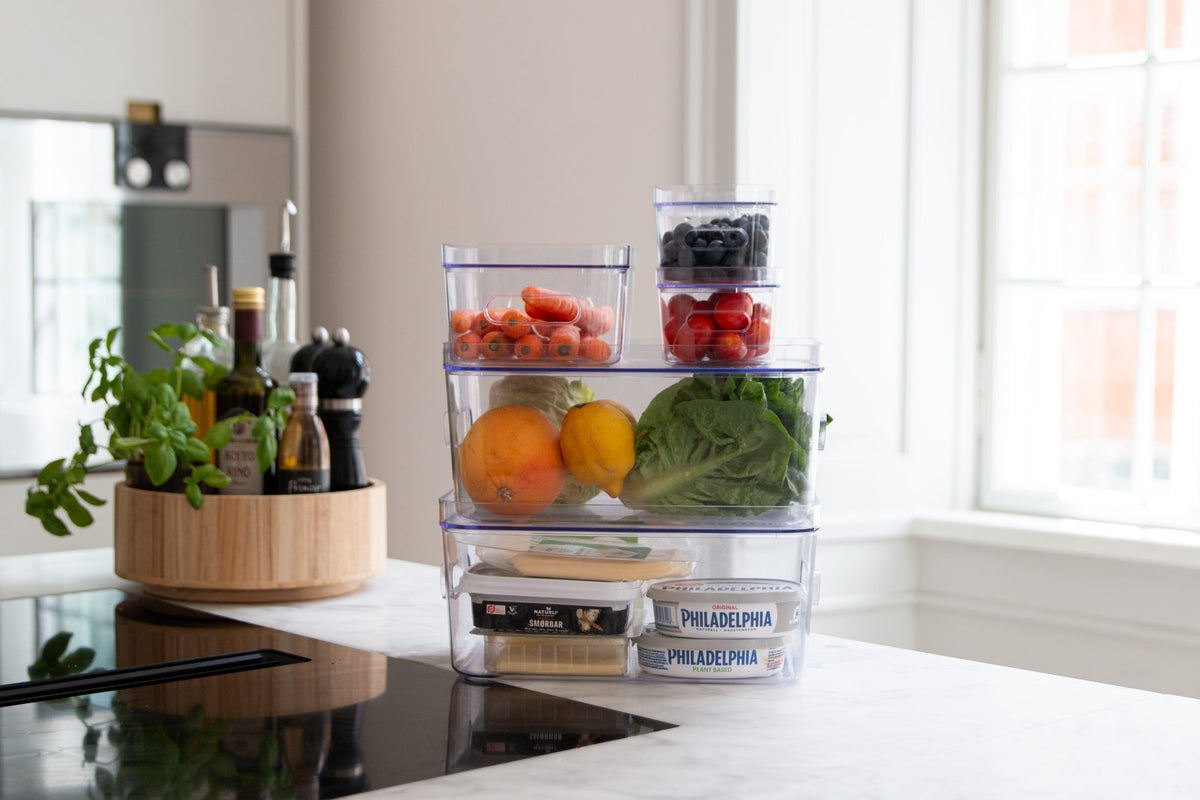
Here, it helps to organize the refrigerator into zones. The egg tray can stand together with the other groceries you want an overview of, while small loose items like snacks and cold cuts get their own container. A Refrigerator bin size XS is great for exactly those small things that otherwise lie around and clutter, and when you pull out the bin, the contents are easy to see. If you want to take a more systematic approach, you will find more solutions in the Refrigerator collection.
With permanent places and a calm overview in the refrigerator, it becomes much easier to use the eggs in time – and you don't have to deal with the doubt about whether they are too old.
Frequently asked questions
Can you eat eggs after the expiration date?
Often yes, if they have been kept cold at all times. Do a water test and check the smell and appearance before using them. If the egg sinks and smells normal, it can usually be used. If it floats or smells unpleasant, it must be discarded.
How do I quickly find out if an egg is bad?
Place the egg in a glass of cold water. If it sinks and lies flat, it is fresh. If it floats to the surface, it is likely too old. A clear sulfurous smell is always a sign that the egg should be thrown out.
Should eggs be stored in the door or on a shelf?
Preferably on a shelf. The temperature in the door fluctuates the most every time you open the refrigerator, while a shelf provides more stable cold and thus better shelf life.
Do eggs last longer with the point down?
Standing eggs with the pointed end down helps keep the air pocket at the top and the yolk centered, which helps preserve freshness a little longer.